creavoid – Where Innovation Meets the Future

Category: Productivity & Automation Tools

Discover the power of Productivity & Automation Tools to streamline your workflows, enhance efficiency, and optimize time management. This category offers insights into the latest tools and software that help individuals and businesses automate tasks, improve project management, and boost productivity. From AI-driven solutions to collaborative platforms, explore guides, reviews, and tips on how to select and implement the best tools for seamless automation and elevated productivity in any workspace.

  • The Ultimate Guide to Automated Customer Support in 2025

    The Ultimate Guide to Automated Customer Support in 2025

    You’ve probably heard the term “automatedsd customer support,” and maybe it conjures up images of clunky, unhelpful robots. Let’s clear the air on what it really is.

    Think of it less as a replacement for your team and more as an incredibly efficient digital assistant. It’s all about freeing up your best people from the repetitive, low-level tasks so they can focus on solving the complex problems that actually require a human touch.

    What Automated Customer Support Really Means

    a man standing next to a computer screen

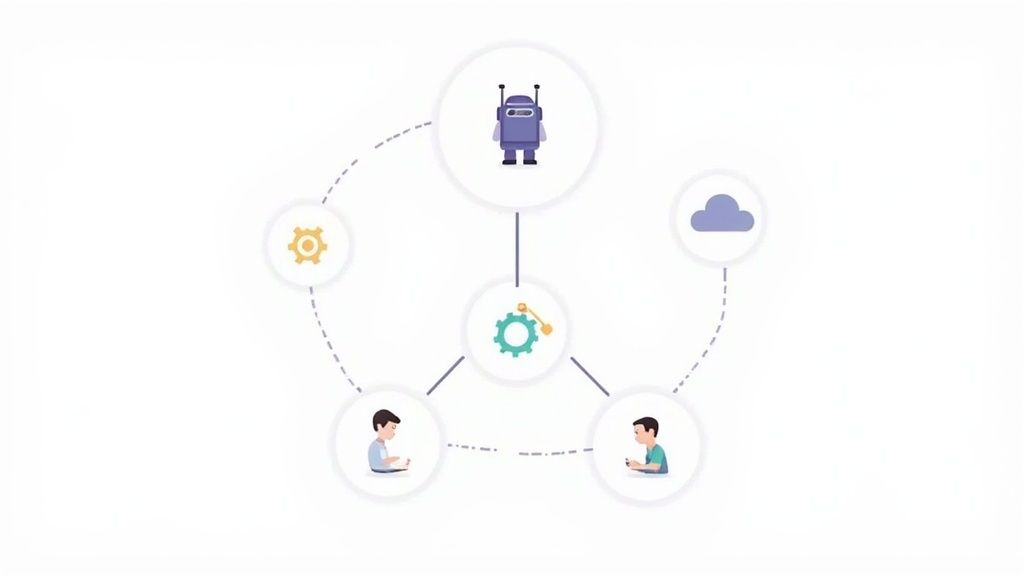
    At its heart, automated customer support is a strategic partnership between technology and your human agents. It’s not about building a wall between you and your customers. Quite the opposite—it’s about intelligently delegating tasks to the right resource at the right time.

    Here’s a better way to think about it: imagine your support team is a group of world-class chefs. Right now, they might be spending half their day just chopping vegetables and washing dishes. It’s necessary work, but it doesn’t require their unique talent.

    Automation is like installing a professional-grade food processor and an industrial dishwasher in their kitchen. Suddenly, your chefs are free to do what they do best: create amazing, complex dishes that customers will rave about. This is exactly what automation does for your support team.

    Core Functions Prime for Automation

    So, what kind of “vegetable chopping” can you hand off to automation? The system shines when dealing with high-volume, low-complexity tasks that follow predictable patterns. This lets your skilled agents handle the nuanced “why” and “how” questions that build real customer loyalty.

    Some of the most common functions handed over to automation include:

    • Answering Frequent Questions: Instantly resolving common inquiries like “Where is my order?” or “What are your business hours?” using chatbots or interactive voice response (IVR).
    • Intelligent Ticket Routing: Automatically analyzing an incoming ticket to figure out what it’s about and who should handle it, sending it to the right agent or department without any manual sorting.
    • Self-Service Portals: Giving customers the power to find their own answers through comprehensive knowledge bases, FAQs, and community forums.
    • Proactive Status Updates: Sending automated emails or SMS messages about order confirmations, shipping notifications, or potential service disruptions before the customer even has to ask.

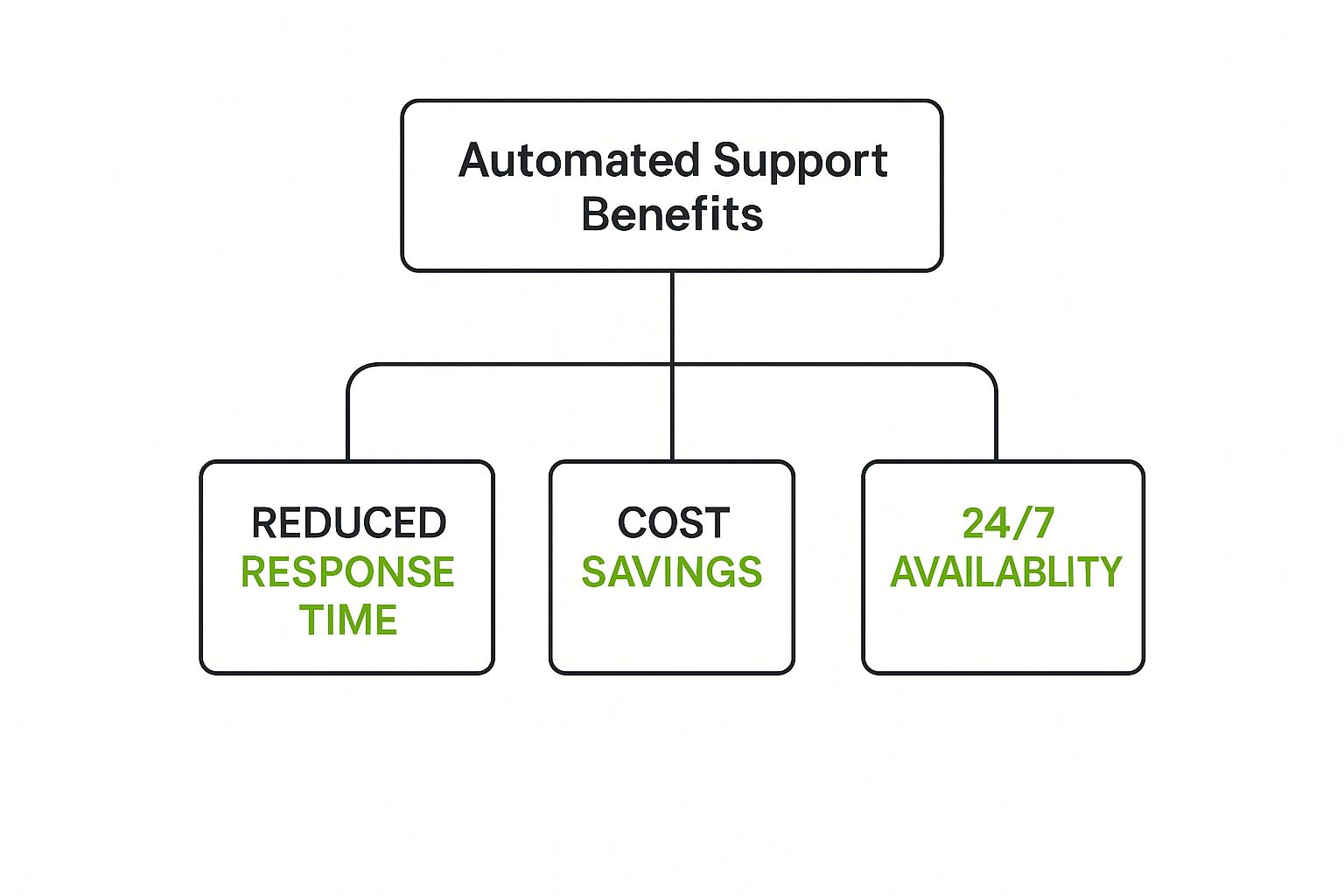
    By taking over these routine tasks, automated systems can slash service operational costs by up to 40%. This not only frees up budget but, more importantly, frees up your team to create genuinely positive customer experiences.

    A Partnership, Not a Replacement

    It’s easy to think the goal of automation is to eliminate human interaction, but that’s a common misconception. A well-designed automation strategy actually makes your human agents more valuable, not less.

    When customers know they can get instant help for simple issues 24/7, their frustration drops. Then, when they do need to speak with a person for a complex or emotional issue, they come into that conversation in a much better frame of mind.

    Better yet, the agent they speak with will be armed with all the context and history gathered by the automated system. This collaborative approach delivers efficiency without sacrificing the empathy and critical thinking that only a human can provide. It’s the foundation of a truly superior customer experience.

    The Core Technologies Driving Automation

    To really understand automated customer support, you have to pop the hood and look at the technologies that make it all tick. These aren’t just buzzwords; they’re the actual engines that power instant answers, smart routing, and personalized conversations. Think of this tech stack like a well-oiled pit crew—each member has a specific job, but they all work together to get the car back on the track in record time.

    The team captain is Artificial Intelligence (AI), which is the broad practice of creating smart systems that can do things normally requiring human brainpower. In our pit crew analogy, AI is the crew chief, calling the shots and making sure the entire operation runs smoothly. It’s what makes an automated system dynamic and responsive, rather than just a simple, static script.

    Working under the chief’s direction are the specialists: Machine Learning and Natural Language Processing. These are the sub-fields of AI that handle the really specific, hands-on tasks.

    Meet the Key Players on the Tech Team

    So, how do all these pieces come together to create an automated support experience that actually feels helpful? Let’s break down who does what.

    • Artificial Intelligence (AI): This is the big-picture technology. AI allows machines to learn from experience, reason through problems, and make decisions. It’s the overarching system that enables all the other automated actions to happen intelligently.
    • Machine Learning (ML): Think of ML as the crew member who gets smarter with every pit stop. It’s a type of AI where systems learn from data without needing to be reprogrammed. This is how a chatbot can improve its answers over time based on the thousands of customer interactions it handles.
    • Natural Language Processing (NLP): This is the team’s communication expert. NLP is the magic that allows technology to understand, interpret, and generate human language—both written and spoken. It’s what helps a bot understand the intent behind “Where’s my stuff?” instead of just seeing keywords.

    These technologies are rarely lone wolves; their real power comes from teamwork. For example, an AI-powered chatbot uses NLP to figure out what a customer is asking and ML to learn from that conversation, making its future responses even better. That’s the secret sauce that turns basic automation into something genuinely useful.

    We’re seeing a major push in how companies are using generative AI and automation, especially heading into 2025. The trend is crystal clear: businesses are deploying AI to offer 24/7 support, slash response times, and handle all the routine questions that used to tie up agents. This frees up the human team to tackle the really complex, high-touch issues, which is becoming a huge competitive advantage.

    From Technical Concepts to Real-World Tools

    So, what do you get when you mix all this tech together? The most common result is the chatbot, a program you’ve almost certainly interacted with, designed to simulate a conversation with a person.

    This image shows a pretty standard chatbot interface. The goal is always to make it feel simple and conversational.
    Image

    When the design is clean and the flow is logical, customers are much more willing to engage with an automated system to get the quick help they need.

    Key Automation Technologies Compared

    It’s important to remember that not all automation is built the same. The right tool for the job depends entirely on what you’re trying to accomplish. A simple, rule-based bot might be perfect for your FAQ page, but it will fall flat if a customer has a multi-part problem. For that, you need a more sophisticated AI assistant.

    Understanding the differences is the first step in building a support strategy that works. If you’re curious about how these ideas extend beyond support, our guide on productivity automation tools is a great next step.

    To help clear things up, here’s a quick rundown of the main technologies, what they do best, and where you’d typically see them in action.

    TechnologyPrimary FunctionBest ForExample Application
    Rule-Based ChatbotsFollow pre-defined conversational flows based on “if-then” logic.Answering simple, repetitive questions with predictable answers.A bot on a shipping company’s website that only provides order status based on a tracking number.
    AI-Powered ChatbotsUse NLP and ML to understand user intent and learn from conversations.Handling a wider range of queries and personalizing interactions.An e-commerce bot that can answer “Where’s my order?” and also recommend products based on chat history.
    Interactive Voice Response (IVR)Uses NLP to understand spoken commands and route callers.Efficiently directing phone calls and handling simple voice-based requests.A banking phone system that lets you say “check my balance” instead of pressing a number.
    AI Knowledge BaseUses AI to search and surface the most relevant help articles for customers or agents.Empowering self-service and speeding up agent-assisted support.A search bar in a help center that understands a complex query and provides the exact right paragraph from an article.

    At the end of the day, picking the right technology comes down to matching the complexity of the tool to the complexity of the customer’s problem. Get that right, and you’re well on your way to building an automation strategy that both your customers and your support team will love.

    Key Business Benefits of Support Automation
    Image
    While the technology behind automated support is cool, let’s be real—the true magic is what it does for your business. We can geek out about the tech all day, but what really matters are the tangible results. These aren’t just small tweaks; they’re fundamental shifts in how you operate, grow, and compete.

    Think about an e-commerce brand bracing for the Black Friday storm. In past years, their small support team was completely swamped. This meant long waits, angry customers, and abandoned carts. This year, they launch an AI chatbot. Instantly, it handles thousands of “Where is my order?” and “What’s your return policy?” tickets, keeping shoppers happy and sales flowing. This isn’t a hypothetical—it’s how automation directly protects your bottom line.

    Drive Down Operational Costs

    One of the first things you’ll notice is the impact on your operational budget. Every single routine question an AI chatbot or self-service portal answers is a ticket a human agent doesn’t have to touch. That adds up, fast.

    In fact, some businesses have slashed their operational service costs by as much as 40% by strategically using automation. This isn’t about replacing your team; it’s about empowering them to handle a much higher volume of inquiries without needing to constantly hire more people. The money you save can then be funneled back into growing other parts of the business.

    Empower Your Human Agents

    There’s a common misconception that automation will make human agents obsolete. The reality is the complete opposite. By taking over the dull, repetitive tasks, automation frees up your team to tackle the high-value work—the complex problems that require empathy, creativity, and critical thinking.

    This has a huge effect on agent productivity and morale. Instead of feeling like broken records answering the same five questions all day, agents evolve into true problem-solvers. Their roles become more engaging and fulfilling, which dramatically cuts down on agent burnout and turnover—a notoriously expensive issue for any support department.

    Automation transforms an agent’s role from a simple “answerer” of questions to a “solver” of complex problems. This elevation doesn’t just improve efficiency; it creates a more rewarding career path, helping you keep your best people.

    Scale Support Operations Seamlessly

    Your company’s growth should never be bottlenecked by your support team’s capacity. Automated customer support gives you the flexibility to scale up or down on a dime, without the logistical nightmare of hiring and training new staff.

    Just think about these advantages:

    • Handle Volume Spikes: Effortlessly manage sudden floods of support tickets during product launches, holiday sales, or seasonal rushes.
    • Expand into New Markets: Offer genuine 24/7 support across different time zones without needing to build a physical office in every location.
    • Maintain Service Quality: Guarantee that every single customer gets a fast, consistent response, whether you have 100 customers or 100,000.

    This ability to scale without friction is a cornerstone of any modern growth strategy. Weaving these automated systems into your operations is a key part of building a successful digital transformation roadmap, ensuring your support can keep up with your ambition.

    Enhance Customer Satisfaction and Loyalty

    At the end of the day, it always comes back to the customer. Modern consumers expect service that is fast, convenient, and effective. Automation nails all three. Giving customers instant answers through chatbots or a knowledge base gets rid of frustrating wait times.

    This is more than a “nice-to-have.” When 73% of customers expect to solve issues on any channel without having to repeat themselves, a connected, automated system becomes a basic expectation. This instant, always-on support leads directly to better customer satisfaction (CSAT) scores. Happier customers are far more likely to stick around, buy again, and tell their friends about you, creating a powerful engine for growth.

    How to Implement Your Automation Strategy

    Jumping into an automated customer support system can feel like a huge project, but it doesn’t have to be. If you break it down into smart, bite-sized steps, you can build a powerful system that helps your customers and gives your team a boost. Don’t think of it as flipping a giant switch—think of it as methodically laying the tracks for a brand-new high-speed train.

    Your starting point isn’t with cool tech, but with simple data. The best place to begin is by digging into your existing support tickets. This is where your customers are literally telling you, in their own words, what they need help with most often.

    Start by Identifying the Low-Hanging Fruit

    Before you even glance at a chatbot platform or sketch out a workflow, you need to spot the tasks that are begging to be automated. These are usually the high-volume, low-effort questions that eat up your agents’ day without needing their real problem-solving smarts.

    Take a look at your support ticket data from the last few months. What patterns pop up again and again? Are you constantly dealing with tickets about:

    • Order status updates (“Where’s my stuff?”)
    • Return policy questions
    • Password resets
    • Business hours or locations
    • Basic questions about product features

    These repeat offenders are your low-hanging fruit. They’re the perfect first targets for automation because the answers are straightforward and don’t require any emotional heavy lifting. Automating just one or two of these can instantly free up a surprising amount of your team’s time.

    Select the Right Tools for the Job

    Once you know what you want to automate, it’s time to figure out the how. The market is packed with tools, from simple rule-based bots to incredibly smart AI platforms. The right one for you comes down to your specific needs, budget, and what tech you’re already using.

    Think about these points when you’re weighing your options:

    • Business Size: A small startup might just need a simple chatbot for its website. A large enterprise, on the other hand, will likely need a solution that works across every channel and plugs right into its CRM.
    • Technical Complexity: Are you looking for a no-code builder that anyone can use, or do you have developers ready to build something more custom and powerful?
    • Integration Capabilities: This is a big one. Make sure the tool can connect smoothly with your helpdesk, CRM, and e-commerce platform. A connected experience is key.

    The shift to automation is happening, and it’s happening fast. Experts predict that by 2025, AI will handle a massive 95% of all customer interactions. This isn’t because AI is replacing humans, but because it’s so good at managing simple questions. This frees up human agents to focus on the more complex, tricky situations where they’re needed most.

    Build and Deploy Your Automated System

    With your tools picked out, it’s time to build. This is where your strategy starts to come to life. A good rollout is more than just turning on a bot; it takes careful design and a solid game plan.

    1. Design Conversational Flows: For chatbots, you need to map out the conversation. Start with a friendly hello, figure out what the user wants, and then guide them to an answer or a clear path to a human agent. Keep it simple and intuitive.
    2. Build a Robust Knowledge Base: Your automation is only as smart as the information it has access to. A detailed, well-organized knowledge base is the brain of your entire operation.
    3. Train Your Human Agents: Get your team ready for their new, more advanced roles. Teach them how to work with the automation, how to handle escalations seamlessly, and how to use their newfound time to create amazing customer experiences. If you’re wondering where to begin, our guide on how to build AI agents for beginners is a great starting point.

    Measure Success and Continuously Refine

    Launching your system isn’t the finish line—it’s just the start of a continuous cycle of improvement. To know if your strategy is actually working, you have to track the right numbers, or Key Performance Indicators (KPIs).

    Here are the essential metrics you should be watching:

    KPIWhat It MeasuresWhy It’s Important
    Ticket Deflection RateThe percentage of customer questions solved without needing a human.This is the clearest measure of your automation’s effectiveness and return on investment.
    First-Contact Resolution (FCR)The rate at which issues are solved in the very first interaction (bot or human).A high FCR means you have an efficient process and happy customers.
    Customer Satisfaction (CSAT)Feedback from customers on their support experience, usually from a quick survey.This tells you if your automation is making people happy or frustrating them.

    Check these metrics regularly to see what’s working and what isn’t. Use customer feedback to tweak your chatbot scripts, update your knowledge base, and make your workflows even better. This ongoing feedback loop is what ensures your automated support system grows with your business and keeps delivering real value.

    Common Automation Mistakes to Avoid

    Image

    Rolling out an automated customer support system can be a huge win, but it’s a path littered with potential missteps. If you’re not careful, you can end up frustrating customers and watching your big project go completely off the rails. The smartest way to get it right? Learn from the mistakes others have already made.

    One of the most common blunders is trying to automate everything. It’s tempting, I get it. But automation really shines with simple, repetitive tasks. Trying to make a bot handle complex, emotional issues is just asking for trouble and is guaranteed to leave your customers seeing red.

    Another classic mistake is making it nearly impossible for a customer to escape the bot and reach a person. Trapping someone in an endless “bot loop” is one of the fastest ways to lose their business for good. The goal is to be helpful and efficient, not to build an impenetrable digital fortress.

    Hiding the Human Escalation Path

    Picture this: a customer has a billing error that’s causing them real stress. They try your chatbot, but it’s only built for basic FAQs. After a few failed attempts to explain their problem, they start desperately searching for a “Talk to an Agent” button… but it’s nowhere to be found. Their frustration quickly boils over into anger. Just like that, a fixable problem has cost you a customer.

    This is exactly what happens with a poor escalation strategy. Your automated tools absolutely must have a clear, easy-to-find off-ramp to a human agent.

    • Solution: Make sure a one-click button like “Speak with an Agent” or “Get Human Help” is always visible in your chat interface.
    • Best Practice: Program your bot to proactively offer a handoff to a person after it fails to understand a customer’s request twice in a row.

    Launching Without a Solid Foundation

    Here’s a simple truth: your automated tools are only as smart as the information you give them. Launching a chatbot or an AI helper without a detailed, well-organized knowledge base is like hiring a librarian for a library with empty shelves. It’s pointless.

    Without a rich source of answers to draw from, your bot will constantly fail. This leads to miserable customer experiences and makes the entire system feel like a waste of time and money.

    A poorly planned automation strategy doesn’t just fail to help—it actively damages the customer relationship. The stakes are incredibly high. Poor service delivery costs U.S. companies an estimated $75 billion a year, often because technology was thrown at a problem without the right human-centric planning. You can dig into the financial impact in this detailed research on customer service effectiveness.

    Forgetting to Train Your Team

    The final, and often overlooked, mistake is failing to prepare your human agents for the change. Automation completely shifts their role. They’re no longer just answering basic questions; they’re becoming specialists who manage complex escalations and build real customer relationships.

    If you just “flip the switch” on automation without training your team on how to work alongside it, you’re creating chaos. Agents need to understand the new workflows, know how to seamlessly take over a conversation from a bot, and feel empowered in their new, more strategic position.

    Steer clear of these common pitfalls, and you’ll be on your way to building an automated support system that genuinely helps customers, empowers your team, and actually delivers a real return on your investment.

    The Future of Automated Customer Support

    If you think automated customer support has already reached its peak, you’re in for a surprise. The entire field is gearing up for a massive shift, moving away from simply reacting to customer problems and into a genuinely predictive, personalized, and seamless world of assistance. The next evolution isn’t just about answering questions faster; it’s about anticipating needs before a customer even realizes they have one.

    Think about this: you get a notification that your package is delayed, and it comes with an automatic refund for the shipping fee. You didn’t even have to check the tracking status. That’s the power of proactive support. AI systems are getting smart enough to analyze data, spot patterns that signal a potential hiccup, and step in to fix it ahead of time. It completely flips the traditional support model on its head.

    Instead of being a cost center that waits for complaints, support becomes a proactive engine for building loyalty.

    Deeper Personalization and Blurring Channels

    As AI continues to learn and evolve, its ability to craft truly individual experiences will explode. The next frontier is hyper-personalization, where automated systems tap into a customer’s entire journey—from their purchase history to their browsing habits—to customize every single interaction. This means conversations will feel less like you’re talking to a machine reading a script and more like you’re chatting with someone who actually gets you.

    The future of automated customer support is a collaborative ecosystem where the line between human and AI blurs, creating an intelligent, predictive, and highly effective experience.

    We’re also going to see the walls between communication channels completely dissolve. It’s already starting to happen. A customer might begin a conversation with a chatbot, then seamlessly transition to a voice or even a video call with a human agent, all within the same window. The context and history of the conversation travel with them, creating one fluid, continuous experience. The future isn’t just about automation; it’s about making technology feel more human and intuitive than ever before.

    Got Questions About Automation? We’ve Got Answers.

    As you start thinking about bringing automated customer support into your business, it’s only natural to have some questions. What’s this really going to cost? Will it replace my team? Where in the world do I even begin? Let’s tackle these common concerns head-on so you can move forward with confidence.

    What’s the Real Cost to Get Started?

    This is usually the first question on every business owner’s mind, and the honest answer is: it depends. The price tag for automation can swing wildly based on how big your business is and what you need it to do.

    • For Small Businesses: Getting started can be surprisingly affordable. A simple, rule-based chatbot for your website might only run a few hundred dollars a month with a subscription service.
    • For Mid-Sized Companies: When you need more muscle—like integrating with your CRM or using smarter AI—you’re looking at a range from the low thousands to several thousand dollars monthly.
    • For Large Enterprises: A fully custom AI solution that works across every channel and plugs into multiple systems is a serious investment. These projects often run into the tens of thousands of dollars or more.

    Will Automation Replace Our Human Support Agents?

    This is a big—and important—concern. But a well-designed automation strategy is all about collaboration, not replacement. Automation is brilliant at handling the high-volume, repetitive stuff that bogs your team down.

    This frees up your human agents to focus on what they do best: solving complex, high-stakes problems that need a real dose of empathy and critical thinking.

    Think of automation as a power-up for your team. By taking over the routine questions, it turns agents from simple question-answerers into expert problem-solvers. Their roles become more valuable, and honestly, a lot more engaging.

    I’m a Small Business. What’s the Best First Step?

    For any small business, my advice is always the same: start simple. Please don’t try to automate everything at once—that’s a recipe for disaster.

    A great first move is to put a basic chatbot on your website to handle your top 3-5 most frequently asked questions. This is a low-risk, high-reward way to dip your toes in the water and see an immediate return.

    How Do We Actually Measure the ROI of This Stuff?

    Knowing if your strategy is working is everything. To measure the return on your investment (ROI), you need to focus on a few key metrics that tell a clear story.

    Track your ticket deflection rate—that’s the percentage of issues your automation solves without needing a human. At the same time, keep a close eye on your Customer Satisfaction (CSAT) scores to make sure people are still happy. If your deflection rate is climbing while your CSAT scores hold steady or even improve, you’ve found the sweet spot. That’s a clear win.


    Ready to see how intelligent automation can slash your operational costs and help you scale support? The team at creavoid specializes in building and implementing AI solutions that help businesses like yours grow. Learn how we can transform your customer service today.


  • Maximizing Home Entertainment and Business Productivity with NAS Devices

    Maximizing Home Entertainment and Business Productivity with NAS Devices

    Understanding NAS Devices: The Basics

    Network Attached Storage (NAS) devices are specialized storage solutions that connect to a network, allowing multiple users and devices to access and share data efficiently. Unlike traditional external hard drives, NAS devices operate through a dedicated operating system, providing enhanced performance, scalability, and features suitable for various applications. Whether used for home entertainment or business productivity, NAS devices fulfill storage needs by supporting various media formats and file types.

    The core function of a NAS device is to provide centralized data storage that is accessible from anywhere on the network. This makes it an ideal solution for multimedia streaming in home settings and file sharing in business environments. Home users can store and access movies, music, and photos while enjoying seamless playback on devices like smart TVs, tablets, and smartphones. Conversely, businesses can utilize NAS to store important documents, manage backups, and facilitate collaboration among team members.

    NAS devices are available in various types, designed to meet different user requirements. Entry-level NAS units are intended for personal use, featuring a few hard drive bays and limited processing power. In contrast, business-oriented NAS solutions offer advanced features such as RAID configurations, higher performance specifications, and support for virtualization. It is crucial to choose a NAS that’s tailored to the specific needs of the users, whether for simple home use or complex enterprise tasks.

    When setting up a NAS device, key hardware requirements include sufficient storage capacity, an adequate processor, and enough RAM to ensure smooth operation. Connecting the NAS to a reliable network is also essential for optimal performance. As storage and streaming demands continue to grow, understanding these aspects of NAS devices becomes increasingly important for maximizing home entertainment experiences and enhancing business productivity.

    Enhancing Home Entertainment with NAS

    Network-Attached Storage (NAS) devices significantly enhance home entertainment setups by providing a centralized platform for managing and streaming media content. This innovation allows users to store a vast library of movies, TV shows, music, and photos, enabling seamless access from various devices connected to the home network. By integrating a NAS into the home entertainment system, individuals can experience streamlined media playback without the limitations often imposed by traditional media storage solutions.

    Home Entertainment NAS Devices (Network Attached Storage)
    Home Entertainment NAS Devices (Network Attached Storage)

    One of the standout features of NAS devices is their compatibility with numerous media server applications, such as Plex and Emby. These applications facilitate the organization of media files, providing an easy-to-navigate interface for users. Additionally, users can transcode media on-the-fly, allowing for optimal streaming quality across different devices, regardless of their specifications. This ensures that all family members can enjoy their favorite content, whether they are using a smart TV, mobile device, or tablet.

    Setting up a NAS as a home media library is relatively straightforward, thanks to user-friendly interfaces and comprehensive setup guides. Users can quickly upload their media collections, categorize files, and even edit metadata for a polished appearance. Moreover, NAS devices support a range of file formats, ensuring that all media types can be made available for streaming without compatibility issues.

    Advanced features of NAS for enhancing home entertainment extend beyond local access. Many NAS solutions offer remote access capabilities, allowing users to stream content from outside their home network. This feature is particularly beneficial for families on the go, enabling streaming of movies or music from anywhere with an internet connection. Additionally, users can share their media libraries with family and friends, fostering a collaborative entertainment experience. Overall, utilizing NAS for home entertainment creates a versatile and enriching environment for all users involved.

    Boosting Business Productivity with NAS

    In today’s competitive landscape, businesses increasingly rely on Network Attached Storage (NAS) devices to optimize productivity and streamline operations. NAS systems provide a centralized data storage solution, making it easier for teams to access, share, and manage files efficiently. This collective access reduces the time spent searching for documents, thereby facilitating smoother workflows and enhanced collaboration among team members.

    One significant advantage of NAS is its ability to automate backup processes, ensuring that critical business data is safeguarded against loss. By implementing a NAS system, companies can schedule regular backups, thereby minimizing the risk of data corruption or accidental deletion. This is particularly vital in the era of remote work, where employees access files from various locations and devices. Consequently, organizations can maintain data integrity and continuity in their operations, regardless of where their employees conduct their work.

    Business Productivity NAS Devices (Network Attached Storage)
    Business Productivity NAS Devices (Network Attached Storage)

    Moreover, many NAS devices come equipped with specialized applications designed for business use, such as file sharing and project management tools. Applications like Trello or Asana can integrate with NAS platforms to automate task assignments, monitor project progress, and optimize team collaboration, enhancing overall productivity. These tools allow for real-time updates and communication, which are essential in a remote working environment where teams may be scattered.

    Data security remains a primary concern for businesses, and NAS systems address this through various security protocols. Organizations can implement user permissions to restrict access based on roles, thus protecting sensitive information from unauthorized personnel. Additionally, many NAS systems support encryption and remote access controls, further safeguarding business data while allowing legitimate users flexibility in accessing resources from different locations.

    In conclusion, NAS devices are invaluable assets for businesses aiming to enhance productivity and efficiency. By centralizing file storage, ensuring reliable backups, and enhancing collaboration through integrated applications, companies can significantly improve their operational effectiveness, particularly in remote settings.

    Choosing the Right NAS Device for Your Needs

    When selecting a Network Attached Storage (NAS) device, it is crucial to assess your specific requirements, whether they lean towards home entertainment or business productivity. The first factor to consider is storage capacity. You must evaluate the amount of data you plan to store, including documents, media files, and backups. For home users, a NAS with a capacity between 4TB to 10TB is often sufficient for multimedia storage and streaming. Conversely, businesses may require larger capacities, with options exceeding 50TB, to accommodate extensive data needs.

    Data protection is another critical consideration. Many NAS devices offer features such as RAID configurations, which provide redundancy in case of a drive failure, ensuring that your data remains safe. For business users, robust backup solutions and comprehensive security measures, like encryption and remote access controls, are essential to protect sensitive information.

    The user interface of the NAS system also plays a role in decision-making. An intuitive and user-friendly interface makes it easier for individuals and teams to manage their data. Home users may prefer simpler interfaces for easy setup and media streaming, while businesses should look for advanced management features that support collaboration and administration functions.

    Compatibility with existing devices is equally important. Ensure that the NAS you choose is compatible with your current operating system, smart TVs, and other devices to streamline data access. Popular NAS brands often include models that work seamlessly with various platforms.

    When it comes to specific models, several top-rated NAS devices stand out. For budget-conscious buyers, options such as the Synology DS220+ or QNAP TS-451+ offer excellent value without compromising functionality. Meanwhile, emerging technologies such as NVMe storage integration are becoming more common, providing faster data access and enhanced performance for both entertainment and business usage. Through careful consideration of these factors, you can select a NAS device that meets your specific needs, thus maximizing your home entertainment or business productivity experience.

  • Closely: Best LinkedIn Automation Tool for B2B Sales

    Closely: Best LinkedIn Automation Tool for B2B Sales

    I remember the days of manually sending LinkedIn connection requests, one by one, hoping to grow my professional network. Like many of you, I spent countless hours crafting personalized messages, tracking responses, and trying to keep up with follow-ups. That’s why I’m genuinely excited to share my experience with Closely, a LinkedIn automation tool that’s transformed how I approach B2B sales and networking.

    Why LinkedIn Matters for Your B2B Success

    Before diving into Closely, let’s talk about why LinkedIn has become the powerhouse of B2B sales. With 900 million users globally and counting (expected to hit 1 billion by 2025), LinkedIn isn’t just another social network – it’s where business happens. What really caught my attention was discovering that LinkedIn generates 80% of all B2B leads compared to other social platforms. When you’re trying to reach decision-makers and Fortune 500 executives, that’s exactly where you want to be. The platform’s visitor-to-lead conversion rate outperforms both X and Facebook by nearly three times!

    The Struggles of Manual Outreach

    Here’s the thing, while LinkedIn is incredibly powerful, most successful deals require multiple follow-ups, and keeping track of hundreds of conversations quickly becomes overwhelming. I learned this the hard way, spending entire weekends just trying to stay on top of my outreach efforts. Here’s what manual outreach typically involves:

    • Time-Consuming Messaging: I spent hours crafting individual messages, which quickly became overwhelming.

    • Tracking Challenges: Remembering who I reached out to and when was a challenge in itself.

    • Complex Follow-Ups: Coordinating follow-ups across various time zones often left me stressed and confused.

    • Inconsistent Engagement: The struggle to keep every conversation alive meant I missed out on many opportunities.

    That process felt like trying to fill an ocean with a teaspoon, and I knew there had to be a better way.

    What is Closely?

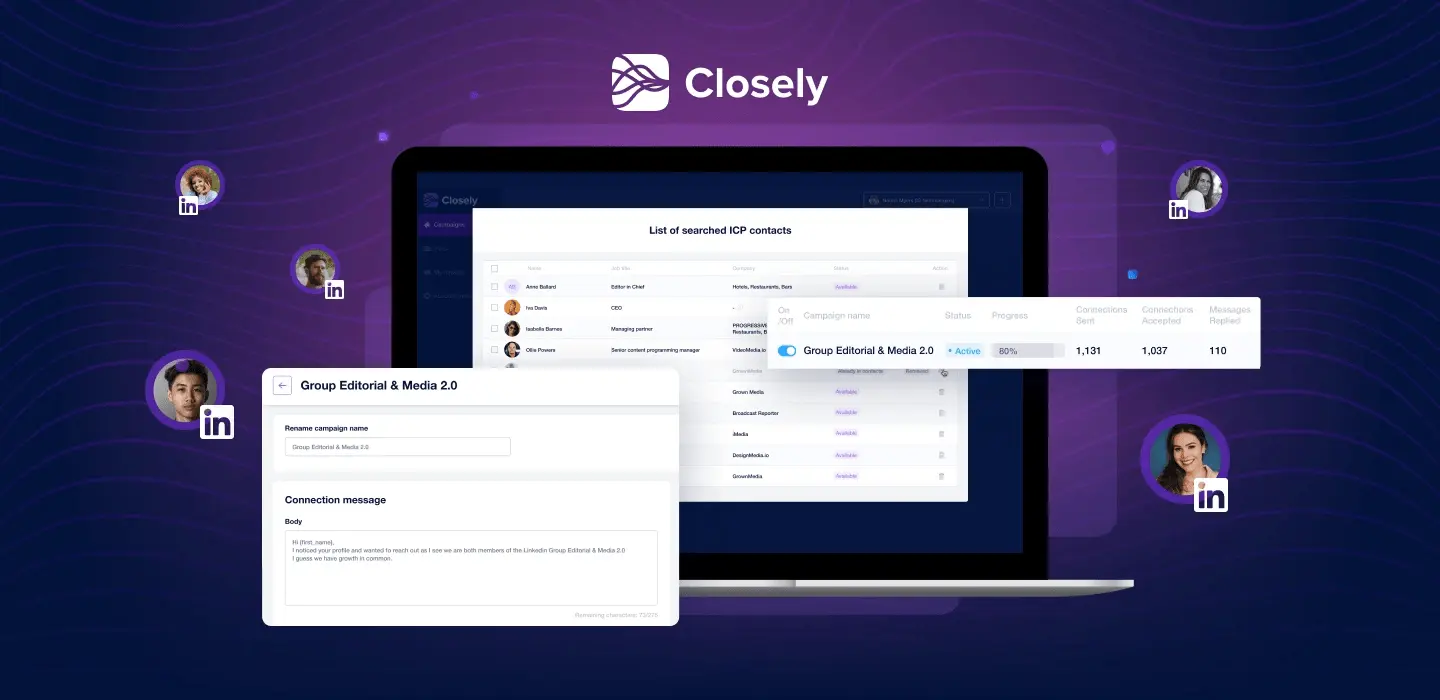
    Closely is a LinkedIn automation tool designed to help sales and marketing teams streamline their outreach efforts and improve their results. Designed with safety in mind, Closely mimics human behavior with a built-in warm-up feature that gradually increases activity, reducing the risk of account flags or bans.

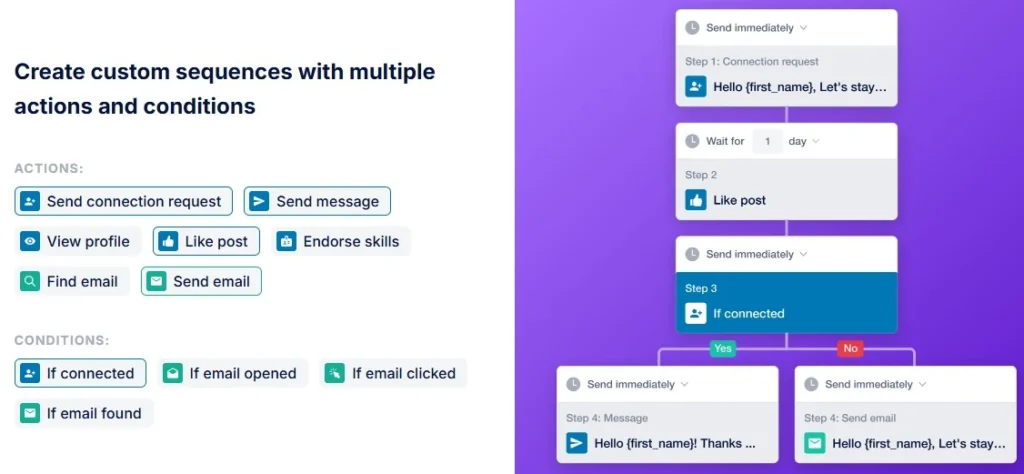
    Whether you’re a sales rep, recruiter, or growth marketer, this tool automates tasks like sending connection requests, personalized messages, profile views, and even email outreach—all from one intuitive dashboard.

    Why you should have it;

    1. Find and connect with targeted leads: Closely enables you to search for and connect with LinkedIn profiles that match your ideal customer profile using sales navigator search.

    2. Send personalized messages: You can create and automate personalized connection requests and follow-up messages to engage with your target audience.

    3. Engage with posts and profiles: Closely can automate profile views and post engagements to increase your visibility and build relationships.

    4. Manage campaigns efficiently: The tool helps you organize and manage your LinkedIn outreach campaigns, track performance, and optimize your strategy.

    Essentially, Closely acts as your LinkedIn assistant, helping you to scale your outreach efforts without spending countless hours on manual tasks.

    Why You Should Use A LinkedIn Automation Tool Like Closely?

    Closely offers a range of benefits for sales and marketing professionals looking to enhance their LinkedIn presence and drive better results:

    1. Save Time and Increase Efficiency: Automate repetitive tasks like sending connection requests and messages, freeing up your time to focus on more strategic activities.

    2. Generate More Leads: By automating outreach to targeted prospects, Closely helps you expand your network and generate a consistent flow of leads.

    3. Improve Engagement and Response Rates: Personalized messages and automated engagement can lead to higher connection acceptance and response rates compared to generic outreach.

    4. Enhance LinkedIn Presence: Consistent profile views and post engagement increase your visibility within your network and the LinkedIn ecosystem.

    5. Track and Optimize Campaigns: Closely provides analytics and reporting features to monitor campaign performance, identify what works best, and refine your approach for optimal results.

    6. Integration with CRM and Other Tools: Closely integrates with popular CRM systems and other sales and marketing tools, streamlining your workflow and data management.

    Closely vs. Competitors: A Quick Comparison

    While Closely is a strong contender in the LinkedIn automation space, it’s helpful to see how it compares to some of its competitors. Here’s a brief overview of a few alternatives:

    Feature

    Closely

    LinkedIn Sales Navigator

    Lusha

    Apollo.io

    Salesloft

    Primary Focus

    LinkedIn Automation

    Sales Intelligence & LinkedIn Platform

    Contact Data & Prospecting

    Sales Intelligence & Engagement Platform

    Sales Engagement & Workflow Automation

    LinkedIn Automation

    Yes

    Strong Features

    Limited Automation Capabilities

    Limited LinkedIn Automation

    Yes, Part of Broader Platform

    Lead Generation

    Yes, Targeted LinkedIn Lead Generation

    Yes, Advanced Search Filters & Lead Lists

    Yes, Contact Data Enrichment & Prospecting

    Yes, Extensive Database & Prospecting Tools

    Yes, Part of Broader Sales Engagement Suite

    Personalization

    Yes, Advanced Personalization Options

    Basic Personalization

    Basic Personalization

    Advanced Personalization Features

    Advanced Personalization Features

    CRM Integration

    Yes

    Yes

    Yes

    Yes

    Yes

    Pricing

    Competitive, Multiple Plans

    Higher Price Point

    Pay-as-you-go or Subscription

    Enterprise-focused Pricing

    Enterprise-focused Pricing

    Please Note: This is a simplified comparison. Each tool offers a wide range of features and functionalities, and the best choice depends on your specific needs and priorities.

    Key Takeaways from the Comparison:

    1. Closely excels in LinkedIn Automation: If your primary goal is focused and effective LinkedIn outreach automation, Closely offers a robust and dedicated solution.

    2. LinkedIn Sales Navigator is a broader sales intelligence platform: While offering some LinkedIn features, Sales Navigator is more focused on sales intelligence and provides advanced search and insights within LinkedIn itself, but less automation.

    3. Lusha and Apollo.io are strong for contact data: These tools are excellent for enriching contact data and providing broader prospecting capabilities beyond just LinkedIn.

    4. Salesloft is an enterprise-grade sales engagement platform: Salesloft offers a comprehensive sales engagement suite, including LinkedIn automation as part of a larger platform, geared towards larger sales teams with complex workflows.

    Closely’s Strengths:

    1. Dedicated LinkedIn Automation: Closely’s core focus is LinkedIn automation, making it highly specialized and feature-rich in this area.

    2. User-Friendly Interface: Closely is known for its intuitive and easy-to-use interface, making it accessible for users of all technical levels.

    3. Affordable Pricing: Compared to some broader sales engagement platforms, Closely offers competitive and flexible pricing plans, making it accessible for smaller businesses and individual professionals.

    closely linkedin automation tool's interface

    Who is Closely For?

    Closely is ideally suited for individuals and businesses seeking a specialized and efficient solution for LinkedIn outreach automation. Its strong suite of features, user-friendly interface, and affordable pricing make it particularly attractive for smaller businesses and professionals looking to enhance their marketing efforts on LinkedIn. If optimizing your LinkedIn automation strategy is your priority, Closely stands out as a top choice. Closely is particularly well-suited for:

    1. Sales Professionals: Sales representatives, business development managers, and sales leaders looking to generate leads (or lead management), connect with prospects, and nurture relationships on LinkedIn.

    2. Marketing Experts: Marketing professionals focused on LinkedIn for content distribution, brand building, and engaging with potential customers.

    3. Small to Medium-Sized Businesses (SMBs): Businesses looking for a cost-effective and efficient way to scale their LinkedIn outreach and lead generation efforts.

    4. Agencies: Marketing and sales agencies managing LinkedIn outreach campaigns for their clients.

    Integrations and Automation Features for Enhanced Outreach

    Closely enhances your workflow by offering seamless integration with widely-used CRMs and tools. It supports a range of systems, including HubSpot CRM, Zoho CRM, Salesforce, and Pipedrive, facilitating direct management of leads and campaigns within these platforms for a streamlined process.

    By connecting Closely to your chosen CRM with just a few clicks, you’ll be able to handle LinkedIn automation straight from the comfort of your CRM dashboard. This connection not only saves time, but also optimizes outreach efforts efficiently. With Closely as your LinkedIn outbound platform, you can efficiently manage your lead generation process while benefiting from advanced analytics. This allows you to track campaign performance, refine strategies, and make data-driven decisions that boost your outreach efficiency.

    The platform’s multi-channel capabilities also enable you to run simultaneous campaigns, whether on LinkedIn or via email, giving you the flexibility to optimize your outreach efforts across different channels while maintaining a cohesive LinkedIn outbound platform strategy.

    dıscover aı agents, supercharge your marketıng efforts

    Is Closely Right for You?

    If you’re looking to automate your LinkedIn efforts, generate more leads, and save valuable time, Closely is definitely worth exploring.

    We encourage you to:

    1. Visit the Closely website: https://closelyhq.com/ to explore their features and pricing in detail.

    2. Check out their Help Center: https://help.closelyhq.com/en/ to learn more about how to use the tool effectively.

    3. Consider signing up for a free trial (if available) or requesting a demo to experience the power of Closely firsthand.

    Conclusion

    The future of B2B sales is increasingly digital, and LinkedIn remains at the forefront of professional networking. With tools like Closely, you can stay ahead of the curve while maintaining authentic connections with your prospects. Whether you’re just starting with LinkedIn automation or looking to upgrade your current process, Closely offers the features and support needed to succeed in modern B2B sales. The platform’s commitment to security, combined with its powerful automation capabilities, makes it a valuable tool for anyone serious about scaling their LinkedIn outreach.

    Remember, successful B2B sales isn’t just about reaching more people – it’s about reaching the right people with the right message at the right time. Closely helps you achieve exactly that, while saving you countless hours in the process.

    Have you tried LinkedIn automation tools before? What are your experiences? Share your thoughts and questions in the comments below!

  • Beginner’s Guide: How to Build AI Agents for Marketing Success

    Beginner’s Guide: How to Build AI Agents for Marketing Success

    Key Highlights

    1. This blog is the best resource for learning how to build AI agents for beginners.
    2. You can explore how to use AI for customer support and as e-commerce helpers.
    3. We make developing AI agents easy with a simple step-by-step guide, so anyone can do it.
    4. Find out about the future of automation with AI software like Make and N8N.
    5. Learn how to test, launch, and keep track of your own AI agent!

    The Quiet Revolution of AI Agents in Modern Marketing

    In 2023, marketers worldwide faced a paradox: while 64% adopted AI tools, only a fraction unlocked the full potential of AI —autonomous systems that don’t just assist but think and act; the AI agents. Fast-forward to 2025, and the landscape has shifted. Startups, freelancers, online business and even local businesses are leveraging AI agents to automate complex workflows, predict customer behavior, and craft strategies that outpace competitors.

    What Are AI Agents?

    AI agents are autonomous programs that analyze data, learn patterns, and execute tasks without constant human input. Unlike basic chatbots or scripted tools, they adapt.

    These agents can be simple, like a chatbot that answers questions from customers. They can also be complex, like a system that runs an entire factory floor. The secret to their success is their ability to see their surroundings, learn from data, and make choices to get the results you want.

    According to a 2024 Gartner report, businesses using AI agents reduced operational costs by 35% and improved campaign ROI by 40%. The key difference? These agents learn. They use machine learning (ML) models to refine their decisions, making them invaluable for tasks like ad optimization or lead scoring.

    Different Types of AI Agents

    Now, just like there are different tools for different jobs, AI agents also come in many types, each with its own advantages. Let’s look at a few:

    1. Simple reflex agents are the rule-followers. They do well in situations with clear patterns and react to certain triggers using pre-set instructions. For example, think of a chatbot that gives quick answers based on the keywords in your questions—that’s a simple reflex agent working!
    2. Next, we have model-based reflex agents. These smart agents create an internal model of their surroundings. They use their knowledge to make better choices, even when things don’t go as expected. They are like master strategists, always planning a few steps ahead!
    3. Finally, the most flexible type is the learning agents. As their name suggests, they learn and grow from experience. Imagine an AI system that gets better at suggesting products the more you use it—that’s the learning agents for you.

    How to Build Your Own AI Agent?

    With today’s technology, you don’t need to be a coding expert to learn to build your first AI agent. The first step is to define your goals. What do you want your AI agent to accomplish Once you know what you want, you can begin collecting the data your AI needs to learn and grow. This is like giving your AI agent the information it needs to become skilled in the area you choose.

    Building an AI agent might sound daunting, but with no-code platforms, it’s akin to assembling IKEA furniture—follow the instructions, and it works. Here’s how:

    Let Me Introduce Make and n8n

    Imagine you have a box of LEGO blocks. Each block can do one thing: send an email, check Instagram, or talk to ChatGPT. Make.com and n8n.io let you snap these blocks together to build a robot (your AI agent) that does tasks automatically.

    For example:

    1. LEGO Block 1: “Check Gmail for new emails.”
    2. LEGO Block 2: “If the email says ‘urgent,’ send a Slack alert.”
    3. LEGO Block 3: “If not, reply with a thank-you message using ChatGPT.”

    That’s it! No coding—just connecting blocks.

    Why Make.com and n8n.io?

    1. No-Code Flexibility: Drag-and-drop interfaces to create workflows (called scenarios in Make.com or workflows in n8n.io).
    2. AI Integration: Connect OpenAI, Claude, DeepSeek or custom models to analyze data, generate content, or make decisions.
    3. Cost-Effective: Free tiers available (Make.com offers 1,000 operations/month; n8n.io is open-source and self-hostable).

    How These AI Tools Work (3 Simple Steps)

    1. Pick a Trigger: What starts the automation?

    Example: “When someone fills out my Google Form…”

    2. Add an Action: What should happen next?

    Example: “…send their info to ChatGPT to check if they’re a good lead.”

    3. Decide the Outcome: What’s the final step?

    Example: “…if they’re a good lead, add them to HubSpot. If not, send a follow-up email.”

    Let’s Build Your First AI Agent (With Examples)

    Example 1: Instagram Comment Responder

    Goal: Automatically reply to comments on your posts.

    Tools: Make.com + ChatGPT.

    Steps:

    1. Trigger: Select “New comment on Instagram” in Make.com.
    2. Action: Connect to ChatGPT and ask: “Write a friendly reply to this comment: [Comment Text].”
    3. Result: Post the ChatGPT reply back to Instagram.

    Why It’s Cool: Saves 10+ hours/month.

    Example 2: Lead Qualifier for Small Businesses

    Goal: Automatically sort leads from a Google Form.

    Tools: n8n.io + Google Forms.

    Steps:

    1. Trigger: Select “New Google Form response” in n8n.io.
    2. Action: Send the response to ChatGPT and ask: “Is this person from a company with 50+ employees?”
    3. Result:
      • If Yes → Add to your CRM (like HubSpot).
      • If No → Send a “Thanks for applying!” email.

    Why It’s Cool: No more manual data entry!

    Make.com vs. n8n.io: Which Should You Use?

    workflow on a board

    Example 1: Build a Social Media Monitoring Agent with Make

    Goal: Automatically track brand mentions, analyze sentiment, and alert your team.

    Steps:

    1. Trigger: Set up a trigger to scan Twitter/X for mentions of your brand (using Make.com’s Twitter module).
    2. AI Analysis: Route mentions to OpenAI’s API to assess sentiment (positive, negative, neutral).

    Action:

    1. Send negative sentiment alerts to Slack.
    2. Auto-reply to positive mentions with a thank-you message.

    Result: A bakery used this agent to catch complaints about delayed deliveries in real time, improving response speed by 90%.

    Example 2: Create a Lead Qualification Agent with n8n

    Goal: Automatically score leads from a Google Form and add qualified ones to a CRM.

    Steps:

    1. Trigger: New Google Form entry (e.g., “Request a Demo”).
    2. AI Processing: Use n8n.io’s Code Node to send lead data to OpenAI:
    3. Ask ChatGPT: “Is this lead from a B2B company with 50+ employees?”

    Decision:

    1. If “Yes,” add to HubSpot CRM.
    2. If “No,” send a nurturing email sequence.

    Result: A SaaS startup automated 80% of lead screening, saving 15 hours/week.

    Key Features of Make.com vs. n8n.io

    FeatureMaken8n
    PricingFree tier (1K ops/month); paid from $9/month.Free open-source; cloud plans from $20/month.
    AI IntegrationsOpenAI, Google AI, pre-built modules.Supports any API (OpenAI, Claude, custom).
    Ease of UseVisual, beginner-friendly.More flexible but steeper learning curve.
    Best ForQuick automations with templates.Complex workflows with custom logic.

    Why These Tools Beat Traditional Coding

    1. Speed: Build a functional AI agent in 1 hour vs. weeks of coding.
    2. Scalability: Start free, then upgrade as your needs grow.
    3. Community Support: Reddit’s r/nocode and Make.com’s template library offer plug-and-play solutions.

    Pro Tip: Use n8n.io’s HTTP Request node to connect niche tools like Lemlist or Airtable that aren’t natively supported.

    How To Get AI To Plan A Marketing Strategy

    AI agents don’t just execute tasks—they strategize. AI marketing automation is here and the minute you’re not using it, you fall behind. Here’s how to turn data into actionable plans:

    Phase 1: Data Aggregation

    Pull data from Google Analytics, CRM systems, and social platforms.

    Tools like Airtable or Notion AI can centralize this data. (This is especially very useful for b2b ai marketing solutions)

    Phase 2: Pattern Recognition

    AI tools like Jasper or Copy.ai analyze data to uncover trends. For example:

    “Video content drives 2x more engagement for B2C brands on TikTok.”

    “Email campaigns sent at 10 AM on Tuesdays have a 30% higher open rate.”

    Phase 3: Strategy Generation

    Platforms like ChatGPT-4 can draft a full marketing plan. Input prompts like:

    “Create a Q4 marketing strategy for a vegan skincare brand targeting millennials.”

    “Allocate a $10,000 budget across Facebook Ads, influencer partnerships, and SEO.”

    Real-World Example: A DTC jewelry brand used an AI agent to analyze 1,000+ Instagram posts, identify trending designs, and launch a collection that sold out in 48 hours.

    Searchıng for best strategıes?

    Check out our blog about Onlıne Marketıng

    Free Tools to Build AI Agents (Without a Tech Team)

    After all this information, I hear you asking “How to create free AI agents tho?”. Other than paid tools, you always have options to use free software;

    For Chatbots:

    1. Google’s Dialogflow: Free tier includes 15,000 monthly requests. Perfect for small businesses.
    2. Botpress: Open-source, with pre-built templates for industries like healthcare or e-commerce.

    For Predictive Analytics:

    1. Hugging Face: Access free ML models for sentiment analysis or trend prediction.
    2. RapidMiner: A free plan for data mining and predictive modeling (limited to 10,000 rows).

    For Workflow Automation:

    1. Zapier’s ChatGPT Integration: Connect AI to 5,000+ apps. Example: “Auto-generate blog ideas from trending Reddit threads.”
    2. Cost-Saving Insight: A 2024 TechCrunch survey found that 68% of solopreneurs use free AI tools to replace $500/month SaaS subscriptions.

    Case Study: How a B2B Startup Scaled with an AI Agent

    The Challenge: A fintech startup struggled to identify decision-makers in Fortune 500 companies. Manual LinkedIn searches took 20+ hours weekly.

    The Solution:

    1. Built a Phantombuster agent to scrape LinkedIn for titles like “CFO” or “Head of Procurement.”
    2. Integrated with HubSpot to auto-send personalized connection requests.
    3. Added a GPT-4 layer to customize pitches based on the prospect’s industry.

    The Result: 500+ qualified leads/month with a 15% response rate. Reduced manual work by 80%, freeing the team to focus on closing deals.

    Common Pitfalls (And How to Avoid Them)

    Mistake 1: Overambition

    A Reddit user shared how their first agent—designed to handle “all social media, emails, and ads”—crashed within days. 

    Fix: Start with one task (e.g., “auto-reply to Instagram DMs”).

    Mistake 2: Ignoring Data Bias

    An e-commerce brand trained its agent on skewed data (mostly male buyers), leading to poor recommendations for female customers. 

    Fix: Use diverse datasets and tools like IBM’s AI Fairness 360 to detect bias.

    Mistake 3: Neglecting Maintenance

    AI agents degrade over time. A travel agency’s chatbot failed to recognize post-pandemic travel trends like “workations.” 

    Fix: Schedule monthly updates to retrain models with fresh data.

    Conclusion: The Future Belongs to AI-Augmented Marketers

    The growth of AI agents boosts human creativity by automating tasks, finding insights, and improving strategies. With Make.com and n8n.io, building AI agents isn’t a distant dream—it’s a weekend project. Automate lead gen, social listening, or content planning without writing a single line of code.

    FAQ

    Can AI agents replace human marketers?

    No—they’re force multipliers. While agents handle grunt work, humans strategize and innovate.

    What’s the cheapest way to start with AI agents?

    Combine Zapier’s free plan with ChatGPT to automate tasks like social media scheduling.

    How long does it take to build an AI agent?

    Simple agents (e.g., email responders) take 2-3 hours. Complex ones (e.g., predictive analytics) require 1-2 weeks.

  • One Of The Best AI Browser Assistant in 2025: HARPA.AI

    One Of The Best AI Browser Assistant in 2025: HARPA.AI

    HARPA.AI - AI Browser Extension

    Key Highlights

    1. HARPA.AI makes online tasks easier. It can summarize web pages and YouTube videos. It also helps you manage your emails and automates your tasks.
    2. It uses the latest AI technology, like ChatGPT Plus, Anthropic Claude, and Google Gemini, right in your browser.
    3. You can enjoy better productivity with AI tools that help you search. It offers web automation and web search for different jobs.
    4. HARPA.AI cares about user privacy. It keeps your data safe and makes sure AI is used responsibly.
    5. Check out the free tier or get premium features available in different plans.

    Introduction

    In today’s fast-paced online world, we want to make the most of the internet. Meet HARPA.AI, an AI helper that can improve your browsing experience. HARPA.AI is a useful tool for your browser. It works well with it and provides many helpful AI features.

    What is HARPA.AI?

    HARPA.AI - Chrome Extension Features

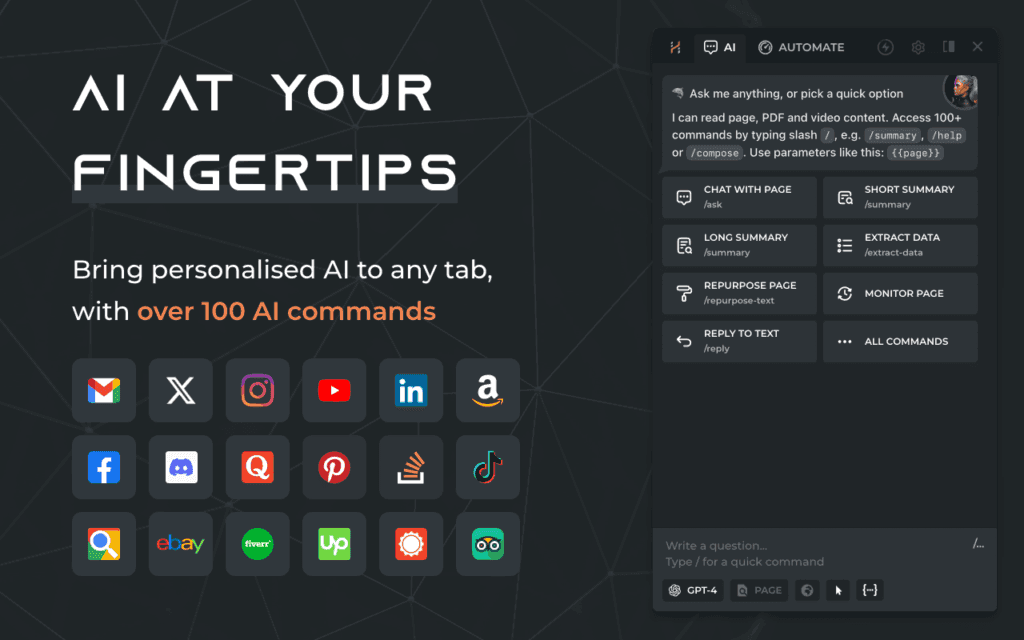
    HARPA.AI is a handy browser extension that uses AI to help you. It acts like a helper right in your browser. With HARPA.AI, you can read hard articles more easily, make boring tasks automatic, and write emails in Gmail. You can even get details from YouTube videos. The best part is you can do all this without needing to switch to a different page.

    HARPA.AI is more than a simple chatbot. It really understands web page content well. It uses powerful language models and the information on the page to provide helpful support, including on Discord. With its mix of AI features and browser tools, HARPA.AI is a great tool for boosting online productivity.

    HARPA.AI | Automation Agent with OpenAI ChatGPT, Anthropic Claude & Google Gemini

    OpenAI’s ChatGPT, Anthropic Claude, and Google Gemini work well with HARPA.AI to improve automation. HARPA.AI acts like an AI assistant that changes how you finish your tasks. It helps you create content for web pages, YouTube videos, and blog entries. With HARPA.AI, making content is easier. It is a useful tool for managing your work. It uses generative AI to make hard tasks simpler and improve the experience for users. Try HARPA.AI and see how it can help you manage tasks with ease and efficiency.

    Use Cases

    The uses of HARPA.AI are endless. It can assist you with several needs and make many tasks easier. Here’s how HARPA.AI can enhance your online experience:

    1. Easy Content Creation: HARPA.AI helps you write blog posts and marketing text quickly and accurately.
    2. Quick Research: With HARPA.AI, you can find key information fast from long web pages and research papers.
    3. Email and Communication: HARPA.AI helps you create professional emails, reply automatically, and keep your inbox tidy.

    Unveiling HARPA AI: A New Era of Chrome Browser Assistance

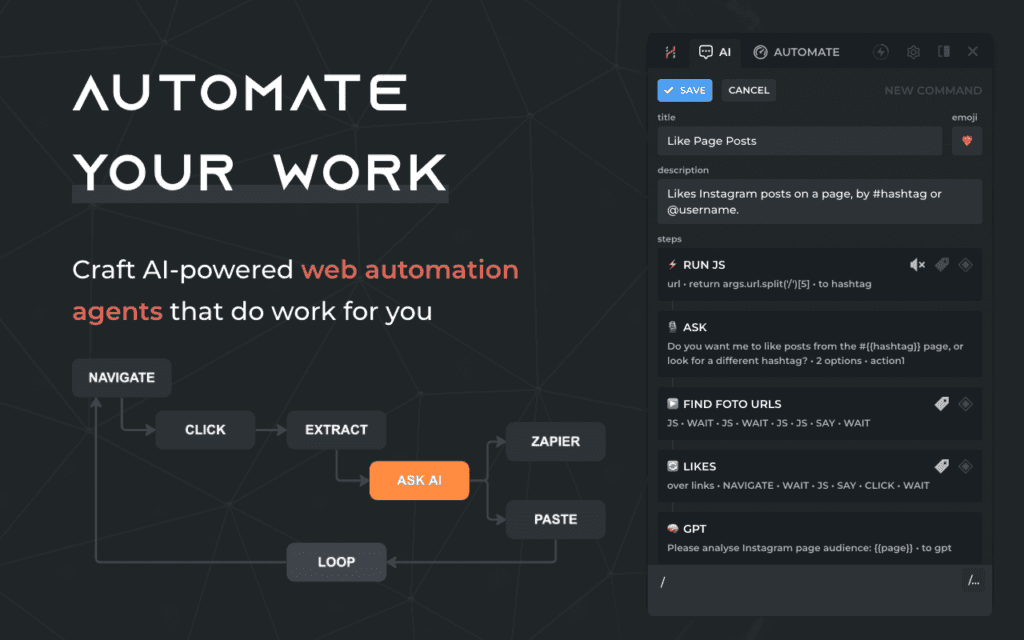
    Automate your tasks with HARPA.AI Chrome Extension

    HARPA.AI provides a new way to assist people who search the internet. It uses AI technology to link users to the information they need. This tool is designed for students, researchers, marketers, and business professionals. HARPA.AI helps users search the web easily and boosts their productivity.

    The Genesis of HARPA AI: Bridging the Digital Divide

    Finding information is simple with HARPA.AI. This tool helps close the gap in the digital world. It is a dependable helper in our fast-paced, information-filled lives. With HARPA.AI, it is easy to explore the online space with confidence.

    HARPA.AI offers simple tools that anyone can use. It has a friendly design that helps people with all tech skills feel comfortable while using it. HARPA AI wants to provide strong tools to everyone, no matter how much they know about technology.

    How HARPA is Revolutionizing Online Navigation and Tasks

    Using HARPA.AI changes how we use the internet. It makes it easier to find things and helps with boring tasks. With HARPA.AI, you can read long articles quickly and get key details from web pages. A few clicks let you create reports easily.

    HARPA.AI changes the way you automate tasks. It can check web pages for updates, follow prices, and fill out forms for you. This helps you save time and energy. You can focus on what matters more. HARPA.AI is easy to add to your work routine. It is a useful tool in our busy digital world.

    Diving Deep into HARPA.AI’s Feature Set

    HARPA AI offers more than just its key features. It gives you several tools to improve your experience. You can enjoy simple web browsing and smart search choices. It also has automation tools and options to personalize what you see. With HARPA.AI, there is something unique for each person.

    Streamlined Web Browsing and Data Management

    Imagine a world where you can check web pages easily. You can understand the main ideas quickly. You can also find helpful facts without any problems. HARPA AI offers tools to help you do this on any webpage.

    With just a few clicks, you can make long articles shorter. You can also find important points in research papers and PDF files. Moreover, you can change tricky web page content into simple bullet points. HARPA AI is unique because it understands the meaning of web pages in context. Regular browsing tools cannot do this.

    Advanced AI-Powered Search Capabilities

    Use HARPA AI with popular search engines like Google Search. It helps you search faster and more accurately. HARPA AI does more than just find keywords. It understands what you mean and the context of your search. This lets it provide results that really matter.

    FeatureDescription
    AI-Powered Query UnderstandingHARPA.AI understands what you are searching for. It improves your queries to be more accurate.
    Contextual Search ResultsGet results that match closely with the content of the web page you are looking at.
    Hallucination-Free ResponsesHARPA AI focuses on giving correct information. It also provides references and checks sources to fight against misinformation.

    The Bright Side: Advantages of Integrating HARPA AI

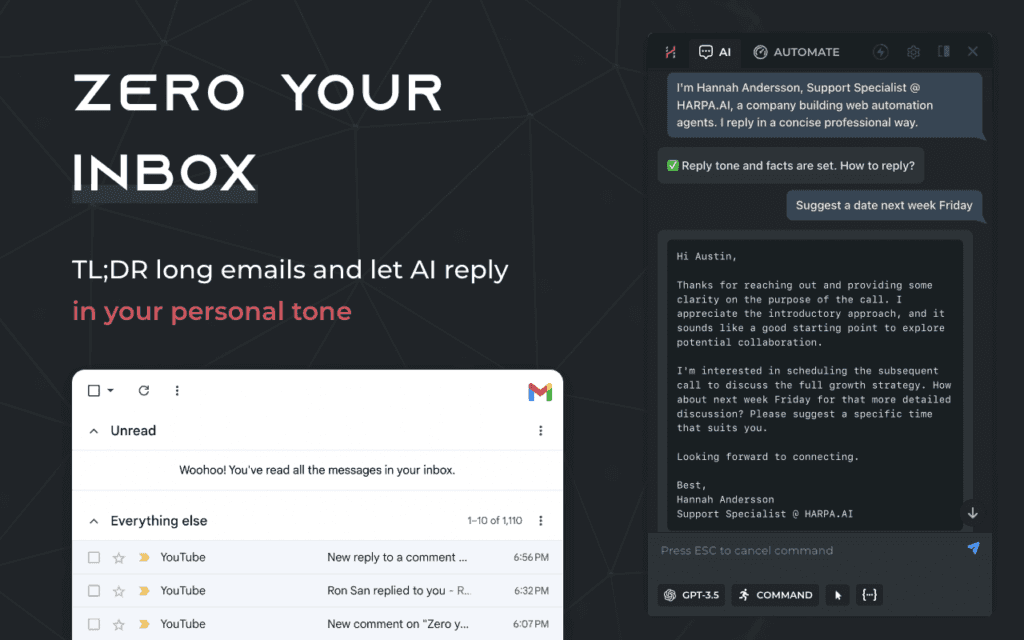
    Zero your inbox with the AI Assistant HARPA.AI

    The benefits of using HARPA AI in your daily online life are many. Users feel they get a big boost in how much they can get done. They have a smoother and better time when they browse the internet. Also, they can reach new levels of efficiency.

    Enhanced Productivity and Efficiency for Users

    HARPA AI makes your work easier. It works like your AI helper and can do tasks on its own. This helps you save time. You can use that time to focus on what is most important.

    You can use the HARPA AI app to reply to emails easily. It can handle your social media, like LinkedIn, X (formerly Twitter), Instagram etc. It can also create content and collect data without difficulty. HARPA AI helps you work faster. This means you can achieve more in a shorter time. It’s a useful chat assistant. Just think about how much time you could save in your busy day with this smart AI assistant.

    Cutting-Edge AI Technology at Your Fingertips

    Get the latest news in natural language processing, machine learning, and deep learning with HARPA AI. These technologies improve your online experience. They work together to make your browsing easier and more fun.

    HARPA AI stands out because it focuses on the user. You don’t have to be an expert to use this smart AI tool. Its easy design makes HARPA AI simple to use for anyone. You can enjoy everything it offers, no matter your tech skills.

    Sector-Specific Customization

    Customization of HARPA AI goes beyond just general uses. It is designed to fit the unique needs of different industries. By using its generative AI skills, HARPA.AI can be made to suit various sectors’ requirements. This industry-focused way of working helps businesses make their operations better with tailored solutions. Whether it’s changing the AI to meet SEO needs for websites or connecting with tools specific to certain fields, HARPA AI provides a flexible setup for smooth use and better results.

    Considering the Flip Side: Disadvantages of HARPA AI

    The benefits of HARPA AI are many. But we should examine this new technology closely. Some users may be concerned about data privacy. They might also feel unsure about how to learn and use HARPA AI in their daily activities.

    When people use AI, they may feel anxious about their data privacy. HARPA AI knows this and cares about your privacy. The HARPA AI team works hard to keep your information safe. They use AI properly and make sure your data is secure.

    Your privacy is important to HARPA AI. They process your data right on your device. This makes it harder for anyone who shouldn’t access it. The developers provide clear information about how they manage your data. You can easily understand their actions regarding your data.

    Compatibility and Learning Curve Considerations

    Using HARPA.AI is similar to other smart software. You might need to spend some time learning how to use it. Still, the creators worked hard to make it easy for you.

    The Google Chrome and Microsoft Edge browsers work great with HARPA.AI. This makes it simple for users to move back and forth between the two. The design of the interface is clean and neat. It still looks good, even after a long time of use.

    Pricing Plans

    HARPA.AI provides several pricing plans to meet the needs of different users. If you are an individual wanting basic features, or a business needing advanced tools, HARPA.AI has options for you. Their pricing is fair, and the billing system is clear. This makes it simple for users to select a plan that works for their budget.

    HARPA AI aims to give users good value for their money. It offers regular updates and very good customer support. This helps users get the most from their investment. When you compare HARPA.AI to other AI tools, it stands out because it is affordable. It does not compromise on quality.

    S1-PlanS2-PlanX-Plan (for Life)
    12 $ per month19 $ per month240 $ for Life (Lifetime Deal)

    Website: harpa.ai

    Download: Google Chrome Extension Web Store

    User Reviews and Feedback

    HARPA.AI has received a lot of positive reviews from users. They value its great support and how well it works with web browsers. A key feature is its speed in navigating web pages and using AI for different tasks. Many people also like the simple interface and helpful support from HARPA AI, which improves their online experience. Overall, users feel cheerful about HARPA AI for its smart ideas and useful tools in web browsing.

    Conclusion

    Subscribe to HARPA.AI now to enhance your internet browsing! It has smart features that help you surf the web easily. You can use AI search and tools that improve your productivity. HARPA AI is a helpful assistant for your browser. It helps you explore the web while keeping your privacy safe. Enjoy new technology with HARPA AI today. Sign up now for a better online experience!

    Frequently Asked Questions

    Is HARPA.AI free?

    HARPA.AI has a free version. This lets you use its main features easily. If you need more advanced tools and unlimited access, check out their affordable premium plans on their homepage.

    How does HARPA.AI ensure user privacy and data security?

    User privacy is very important to HARPA.AI. They use strong encryption and security measures to keep data safe. HARPA.AI strictly follows rules to protect user information.

    Can HARPA.AI be customized for specific industries or businesses?

    Yes, HARPA.AI can be tailored for various industries and businesses. It uses tools from ChatGPT, Anthropic Claude, and Google Gemini. By adjusting the assistant to meet specific needs, it can work better in several areas.

    Is it compatible with all web browsers?

    HARPA AI is now an extension for Google Chrome. It works well in the Chrome browser. You can also try it on Microsoft Edge, but it’s not fully supported yet. The team is looking for ways to make it work on other popular browsers too.