creavoid – Where Innovation Meets the Future

Tag: future of AI technology

  • Omnihuman 1: Image to Video – The Future of AI Video

    Omnihuman 1: Image to Video – The Future of AI Video

    Imagine taking a single photo and turning it into a realistic video where the person moves, speaks, and gestures naturally. It sounds like something straight out of a sci-fi movie, but AI technology has made it possible. ByteDance’s OmniHuman 1 is one of the latest tools pushing the boundaries of AI-generated video content, making professional-level animation accessible to everyone—from hobbyists to business owners.

    What Is OmniHuman 1?

    Omnihuman 1 is ByteDance’s (parent company of TikTok) latest innovation in AI video generation. It takes one static image and transforms it into a lifelike video by animating full-body movements—not just facial expressions. Here’s what makes it truly exciting:

    • Full-Body Animation: Unlike typical deepfake tools that only move faces, OmniHuman 1 can bring an entire subject to life, capturing natural gestures, head tilts, and even hand movements.

    • Multimodal Inputs: It works with weak signals like a single image, supplemented by audio or text cues. Think of it as your personal digital animator that turns a photo into a mini-movie.

    • Data-Driven Realism: Powered by over 18,000 hours of human video data, the system learns the nuances of natural motion, ensuring that every animation feels authentic and engaging.

    What Makes OmniHuman 1 Stand Out?

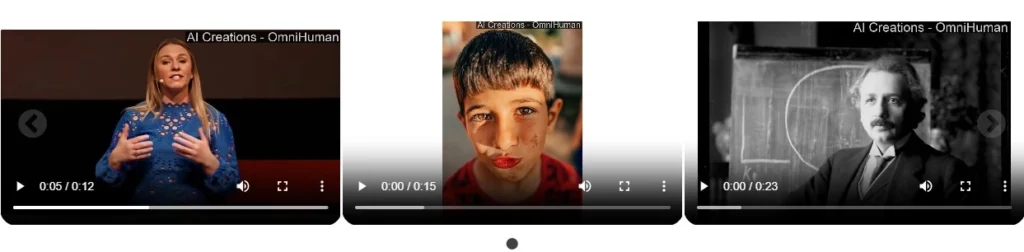
    Most AI animation tools focus on facial features, but OmniHuman 1 takes it a step further by animating the entire body. That means not just lip-syncing but also realistic hand gestures, head tilts, and body language that match speech and emotion. This creates a more natural and believable effect, useful for everything from digital avatars to historical reenactments.

    ByteDance, the company behind TikTok, trained OmniHuman 1 using vast datasets of human movement. With over 18,000 hours of video analyzed, the AI has learned to mimic real-life gestures and expressions with impressive accuracy.

    It works by using multimodal learning, which means it can take a static image, audio, or text and turn it into a fluid animation. The result? A video that feels more human and less robotic.

    How Does OmniHuman 1 Work?

    ai powered video generation with omnihuman

    OmniHuman 1 is powered by a diffusion-based transformer model that predicts motion and facial dynamics with minimal input. The AI first maps key facial and skeletal points from an image, then compares them with movement patterns in its dataset to generate realistic animation.

    If an audio clip is provided, the AI analyzes the speech and synchronizes mouth movements accordingly. Unlike older AI models that produced stiff, unnatural animations, this approach ensures smoother motion and more expressive results.

    Key Features

    OmniHuman 1 comes with several standout features that set it apart from traditional deepfake or animation tools:

    • Single-Image to Video Conversion: One of its most impressive capabilities is generating a full-body video from just a single image paired with an audio track. This means that by providing a photo and sound, the model can produce a video where the subject not only talks but also exhibits natural gestures and body movements.

    • Multiple Motion Inputs: The system accepts various motion signals. Whether you use audio-driven animation to capture the nuances of speech or video-driven inputs to replicate specific gestures, OmniHuman 1 adapts seamlessly. In some cases, you can even combine modalities—using audio for lip-sync and a reference clip for upper-body motion—to achieve more detailed results.

    • Adaptability to Different Formats: OmniHuman 1 is designed to work with different aspect ratios and body proportions. Whether you need a portrait video for social media or a widescreen clip for cinematic projects, the model adjusts to ensure a consistent, realistic output.

    • Style Adaptations: Beyond photorealism, the model offers flexibility in output styles. Users can generate outputs ranging from hyper-realistic animations to more stylized or cartoon-like renditions. This creative freedom is particularly useful for content creators working in fields such as gaming, virtual influencers, or experimental filmmaking.

    Performance Metrics

    To assess the quality and naturalness of its output, ByteDance has benchmarked OmniHuman 1 against other leading AI animation models. Here are some key performance metrics:

    • Lip-Sync Accuracy: OmniHuman 1 achieves a score of 5.255, compared to 6.627 for CyberHost and 4.814 for Loopy. While it isn’t the top scorer in this category, its performance remains competitive.

    • Fréchet Video Distance (FVD): With a score of 15.906, OmniHuman 1 demonstrates high overall video quality. Lower FVD values indicate better video realism; here, it outperforms Loopy (16.134) and far exceeds DiffTED (58.871).

    • Gesture Expressiveness (HKV): This metric is particularly notable for OmniHuman 1, which scores 47.561—significantly higher than CyberHost’s 24.733 and DiffGest’s 23.409. This indicates that the model produces fluid and natural body movements.

    • Hand Keypoint Confidence (HKC): Scoring 0.898, OmniHuman 1 slightly outperforms CyberHost (0.884) and is well ahead of DiffTED (0.769), ensuring precise and reliable hand animations.
    omnihuman 1 ai video generation

    Highlights

    • Facial accuracy – 94% alignment with real human expressions.

    • Motion smoothness – Rated at 92% natural movement compared to real-life video footage.

    • Audio-lip sync precision – 98% accuracy in matching speech with mouth movements.

    • Processing speed – Generates a 30-second animation in under 10 seconds.

    Who Can Benefit from OmniHuman 1?

    This AI tool has a wide range of applications across different industries.

    Content Creators

    YouTubers, influencers, and marketers can use OmniHuman 1 to create engaging content without expensive production setups. It can be used to create branded content, explainer videos, or even personalized marketing messages, all while keeping costs low and production times short.

    Education and History

    Teachers and historians can use it to bring historical figures to life. Imagine students watching an AI-generated Abraham Lincoln delivering a speech or seeing a digital recreation of ancient philosophers discussing their ideas. This technology makes learning more interactive and engaging.

    Business and Marketing

    Companies can use AI-generated video for product demonstrations, virtual salespeople, or even customer service avatars. Instead of hiring actors or setting up costly shoots, businesses can generate professional-looking videos that still feel personal and engaging.

    Accessibility and Personalization

    For people with disabilities, AI-generated videos can make digital communication more expressive and engaging. It can provide a new way for individuals relying on text-to-speech to share video messages with natural-looking facial expressions and gestures.

    Check out HOW TO USE AI AGENTS FOR MARKETING

    The Ethics and Risks of AI-Generated Videos

    As exciting as AI-generated video technology is, it also brings ethical concerns.

    Transparency in AI-Generated Content

    AI videos should be clearly labeled to prevent confusion or misinformation. If viewers know they are watching AI-generated content, it builds trust and avoids deception.

    Avoiding Misuse

    The ability to create realistic human videos raises concerns about deepfakes, fake news, and identity theft. Regulations and ethical guidelines must be in place to prevent misuse while still allowing innovation.

    Creating AI-generated videos of real people without their consent is a major privacy issue. Ensuring that proper guidelines and permissions are followed is essential to prevent identity misuse.

    What’s Next for AI-Powered Video?

    The future of AI-generated video is happening now, and it’s moving faster than ever. Imagine real-time AI avatars that can interact seamlessly in virtual meetings, AI-driven video dubbing that makes content instantly multilingual, and interactive AI personalities that feel like real people. These aren’t distant dreams—they’re just around the corner.

    With every advancement, AI-generated videos are getting closer to being indistinguishable from real footage. This is a game-changer for entertainment, education, and digital communication. The way we create and consume content is evolving, and those who embrace these changes will be at the forefront of this revolution.

    Final Thoughts

    We’re witnessing a massive shift in content creation, and OmniHuman 1 is leading the charge. Whether you’re an artist pushing creative boundaries, a business looking for cutting-edge marketing tools, or an educator reimagining learning experiences, AI-powered video is unlocking possibilities we’ve never seen before.

    This is just the beginning. The future of digital media is being rewritten, and AI is holding the pen. Are you ready to be part of it?

  • Beginner’s Guide: How to Build AI Agents for Marketing Success

    Beginner’s Guide: How to Build AI Agents for Marketing Success

    Key Highlights

    1. This blog is the best resource for learning how to build AI agents for beginners.
    2. You can explore how to use AI for customer support and as e-commerce helpers.
    3. We make developing AI agents easy with a simple step-by-step guide, so anyone can do it.
    4. Find out about the future of automation with AI software like Make and N8N.
    5. Learn how to test, launch, and keep track of your own AI agent!

    The Quiet Revolution of AI Agents in Modern Marketing

    In 2023, marketers worldwide faced a paradox: while 64% adopted AI tools, only a fraction unlocked the full potential of AI —autonomous systems that don’t just assist but think and act; the AI agents. Fast-forward to 2025, and the landscape has shifted. Startups, freelancers, online business and even local businesses are leveraging AI agents to automate complex workflows, predict customer behavior, and craft strategies that outpace competitors.

    What Are AI Agents?

    AI agents are autonomous programs that analyze data, learn patterns, and execute tasks without constant human input. Unlike basic chatbots or scripted tools, they adapt.

    These agents can be simple, like a chatbot that answers questions from customers. They can also be complex, like a system that runs an entire factory floor. The secret to their success is their ability to see their surroundings, learn from data, and make choices to get the results you want.

    According to a 2024 Gartner report, businesses using AI agents reduced operational costs by 35% and improved campaign ROI by 40%. The key difference? These agents learn. They use machine learning (ML) models to refine their decisions, making them invaluable for tasks like ad optimization or lead scoring.

    Different Types of AI Agents

    Now, just like there are different tools for different jobs, AI agents also come in many types, each with its own advantages. Let’s look at a few:

    1. Simple reflex agents are the rule-followers. They do well in situations with clear patterns and react to certain triggers using pre-set instructions. For example, think of a chatbot that gives quick answers based on the keywords in your questions—that’s a simple reflex agent working!
    2. Next, we have model-based reflex agents. These smart agents create an internal model of their surroundings. They use their knowledge to make better choices, even when things don’t go as expected. They are like master strategists, always planning a few steps ahead!
    3. Finally, the most flexible type is the learning agents. As their name suggests, they learn and grow from experience. Imagine an AI system that gets better at suggesting products the more you use it—that’s the learning agents for you.

    How to Build Your Own AI Agent?

    With today’s technology, you don’t need to be a coding expert to learn to build your first AI agent. The first step is to define your goals. What do you want your AI agent to accomplish Once you know what you want, you can begin collecting the data your AI needs to learn and grow. This is like giving your AI agent the information it needs to become skilled in the area you choose.

    Building an AI agent might sound daunting, but with no-code platforms, it’s akin to assembling IKEA furniture—follow the instructions, and it works. Here’s how:

    Let Me Introduce Make and n8n

    Imagine you have a box of LEGO blocks. Each block can do one thing: send an email, check Instagram, or talk to ChatGPT. Make.com and n8n.io let you snap these blocks together to build a robot (your AI agent) that does tasks automatically.

    For example:

    1. LEGO Block 1: “Check Gmail for new emails.”
    2. LEGO Block 2: “If the email says ‘urgent,’ send a Slack alert.”
    3. LEGO Block 3: “If not, reply with a thank-you message using ChatGPT.”

    That’s it! No coding—just connecting blocks.

    Why Make.com and n8n.io?

    1. No-Code Flexibility: Drag-and-drop interfaces to create workflows (called scenarios in Make.com or workflows in n8n.io).
    2. AI Integration: Connect OpenAI, Claude, DeepSeek or custom models to analyze data, generate content, or make decisions.
    3. Cost-Effective: Free tiers available (Make.com offers 1,000 operations/month; n8n.io is open-source and self-hostable).

    How These AI Tools Work (3 Simple Steps)

    1. Pick a Trigger: What starts the automation?

    Example: “When someone fills out my Google Form…”

    2. Add an Action: What should happen next?

    Example: “…send their info to ChatGPT to check if they’re a good lead.”

    3. Decide the Outcome: What’s the final step?

    Example: “…if they’re a good lead, add them to HubSpot. If not, send a follow-up email.”

    Let’s Build Your First AI Agent (With Examples)

    Example 1: Instagram Comment Responder

    Goal: Automatically reply to comments on your posts.

    Tools: Make.com + ChatGPT.

    Steps:

    1. Trigger: Select “New comment on Instagram” in Make.com.
    2. Action: Connect to ChatGPT and ask: “Write a friendly reply to this comment: [Comment Text].”
    3. Result: Post the ChatGPT reply back to Instagram.

    Why It’s Cool: Saves 10+ hours/month.

    Example 2: Lead Qualifier for Small Businesses

    Goal: Automatically sort leads from a Google Form.

    Tools: n8n.io + Google Forms.

    Steps:

    1. Trigger: Select “New Google Form response” in n8n.io.
    2. Action: Send the response to ChatGPT and ask: “Is this person from a company with 50+ employees?”
    3. Result:
      • If Yes → Add to your CRM (like HubSpot).
      • If No → Send a “Thanks for applying!” email.

    Why It’s Cool: No more manual data entry!

    Make.com vs. n8n.io: Which Should You Use?

    workflow on a board

    Example 1: Build a Social Media Monitoring Agent with Make

    Goal: Automatically track brand mentions, analyze sentiment, and alert your team.

    Steps:

    1. Trigger: Set up a trigger to scan Twitter/X for mentions of your brand (using Make.com’s Twitter module).
    2. AI Analysis: Route mentions to OpenAI’s API to assess sentiment (positive, negative, neutral).

    Action:

    1. Send negative sentiment alerts to Slack.
    2. Auto-reply to positive mentions with a thank-you message.

    Result: A bakery used this agent to catch complaints about delayed deliveries in real time, improving response speed by 90%.

    Example 2: Create a Lead Qualification Agent with n8n

    Goal: Automatically score leads from a Google Form and add qualified ones to a CRM.

    Steps:

    1. Trigger: New Google Form entry (e.g., “Request a Demo”).
    2. AI Processing: Use n8n.io’s Code Node to send lead data to OpenAI:
    3. Ask ChatGPT: “Is this lead from a B2B company with 50+ employees?”

    Decision:

    1. If “Yes,” add to HubSpot CRM.
    2. If “No,” send a nurturing email sequence.

    Result: A SaaS startup automated 80% of lead screening, saving 15 hours/week.

    Key Features of Make.com vs. n8n.io

    FeatureMaken8n
    PricingFree tier (1K ops/month); paid from $9/month.Free open-source; cloud plans from $20/month.
    AI IntegrationsOpenAI, Google AI, pre-built modules.Supports any API (OpenAI, Claude, custom).
    Ease of UseVisual, beginner-friendly.More flexible but steeper learning curve.
    Best ForQuick automations with templates.Complex workflows with custom logic.

    Why These Tools Beat Traditional Coding

    1. Speed: Build a functional AI agent in 1 hour vs. weeks of coding.
    2. Scalability: Start free, then upgrade as your needs grow.
    3. Community Support: Reddit’s r/nocode and Make.com’s template library offer plug-and-play solutions.

    Pro Tip: Use n8n.io’s HTTP Request node to connect niche tools like Lemlist or Airtable that aren’t natively supported.

    How To Get AI To Plan A Marketing Strategy

    AI agents don’t just execute tasks—they strategize. AI marketing automation is here and the minute you’re not using it, you fall behind. Here’s how to turn data into actionable plans:

    Phase 1: Data Aggregation

    Pull data from Google Analytics, CRM systems, and social platforms.

    Tools like Airtable or Notion AI can centralize this data. (This is especially very useful for b2b ai marketing solutions)

    Phase 2: Pattern Recognition

    AI tools like Jasper or Copy.ai analyze data to uncover trends. For example:

    “Video content drives 2x more engagement for B2C brands on TikTok.”

    “Email campaigns sent at 10 AM on Tuesdays have a 30% higher open rate.”

    Phase 3: Strategy Generation

    Platforms like ChatGPT-4 can draft a full marketing plan. Input prompts like:

    “Create a Q4 marketing strategy for a vegan skincare brand targeting millennials.”

    “Allocate a $10,000 budget across Facebook Ads, influencer partnerships, and SEO.”

    Real-World Example: A DTC jewelry brand used an AI agent to analyze 1,000+ Instagram posts, identify trending designs, and launch a collection that sold out in 48 hours.

    Searchıng for best strategıes?

    Check out our blog about Onlıne Marketıng

    Free Tools to Build AI Agents (Without a Tech Team)

    After all this information, I hear you asking “How to create free AI agents tho?”. Other than paid tools, you always have options to use free software;

    For Chatbots:

    1. Google’s Dialogflow: Free tier includes 15,000 monthly requests. Perfect for small businesses.
    2. Botpress: Open-source, with pre-built templates for industries like healthcare or e-commerce.

    For Predictive Analytics:

    1. Hugging Face: Access free ML models for sentiment analysis or trend prediction.
    2. RapidMiner: A free plan for data mining and predictive modeling (limited to 10,000 rows).

    For Workflow Automation:

    1. Zapier’s ChatGPT Integration: Connect AI to 5,000+ apps. Example: “Auto-generate blog ideas from trending Reddit threads.”
    2. Cost-Saving Insight: A 2024 TechCrunch survey found that 68% of solopreneurs use free AI tools to replace $500/month SaaS subscriptions.

    Case Study: How a B2B Startup Scaled with an AI Agent

    The Challenge: A fintech startup struggled to identify decision-makers in Fortune 500 companies. Manual LinkedIn searches took 20+ hours weekly.

    The Solution:

    1. Built a Phantombuster agent to scrape LinkedIn for titles like “CFO” or “Head of Procurement.”
    2. Integrated with HubSpot to auto-send personalized connection requests.
    3. Added a GPT-4 layer to customize pitches based on the prospect’s industry.

    The Result: 500+ qualified leads/month with a 15% response rate. Reduced manual work by 80%, freeing the team to focus on closing deals.

    Common Pitfalls (And How to Avoid Them)

    Mistake 1: Overambition

    A Reddit user shared how their first agent—designed to handle “all social media, emails, and ads”—crashed within days. 

    Fix: Start with one task (e.g., “auto-reply to Instagram DMs”).

    Mistake 2: Ignoring Data Bias

    An e-commerce brand trained its agent on skewed data (mostly male buyers), leading to poor recommendations for female customers. 

    Fix: Use diverse datasets and tools like IBM’s AI Fairness 360 to detect bias.

    Mistake 3: Neglecting Maintenance

    AI agents degrade over time. A travel agency’s chatbot failed to recognize post-pandemic travel trends like “workations.” 

    Fix: Schedule monthly updates to retrain models with fresh data.

    Conclusion: The Future Belongs to AI-Augmented Marketers

    The growth of AI agents boosts human creativity by automating tasks, finding insights, and improving strategies. With Make.com and n8n.io, building AI agents isn’t a distant dream—it’s a weekend project. Automate lead gen, social listening, or content planning without writing a single line of code.

    FAQ

    Can AI agents replace human marketers?

    No—they’re force multipliers. While agents handle grunt work, humans strategize and innovate.

    What’s the cheapest way to start with AI agents?

    Combine Zapier’s free plan with ChatGPT to automate tasks like social media scheduling.

    How long does it take to build an AI agent?

    Simple agents (e.g., email responders) take 2-3 hours. Complex ones (e.g., predictive analytics) require 1-2 weeks.

  • DeepSeek R1: The #1 AI Tool for Data Analysis in 2025 (Guide + Case Studies)

    DeepSeek R1: The #1 AI Tool for Data Analysis in 2025 (Guide + Case Studies)

    Alright, let’s be real—data is everywhere. It’s in your Instagram analytics, your Spotify Wrapped, and even your Uber receipts. But what if I told you there’s a way to actually use all that data to level up your life, your blog, or even your side hustle?

    Introducing DeepSeek r1, the AI-powered tool that’s basically like having a genius data scientist in your back pocket. Whether you’re trying to grow your blog, ace your research, or just figure out why your TikTok videos aren’t going viral, DeepSeek is here to save the day.

    1. What is DeepSeek? (And How Does It Work?)

    DeepSeek is an AI-powered platform that turns raw data into actionable insights using machine learning and natural language processing. Unlike ChatGPT (which focuses on text) or Tableau (which requires coding), DeepSeek’s drag-and-drop interface lets anyone analyze data, predict trends, and create visuals—no tech skills needed.

    DeepSeek’s journey began when a team of engineers noticed a gap: most AI tools were either too generic (like ChatGPT for text generation) or too niche for everyday users. They built DeepSeek to bridge that gap, combining machine learning and natural language processing to analyze data with surgical precision. By 2024, it had outgrown its experimental phase, attracting users in finance, healthcare, and even retail.

    Born as a side project in a tech lab, DeepSeek has exploded into a $1B+ industry, reshaping everything from stock markets to TikTok strategies. But here’s the kicker: It’s not just for tech nerds. Let’s unpack why everyone from bakery owners to Fortune 500 CEOs is obsessed.

    How It Works in 40 Words:

    Upload your data (CSV, Excel, etc.), ask a question (e.g., “Why are sales dropping?”), and DeepSeek r1 analyzes patterns, predicts outcomes, and generates charts. It’s like having a data scientist on speed dial.

    “DeepSeek’s algorithms are 30% more accurate than industry standards,” says Dr. Emily Tran, AI Researcher at MIT.

    2. The “Aha!” Moment: How DeepSeek R1 Solves Real Problems

    The Coffee Shop Turnaround

    Take Bean There, Done That, a cozy café in Austin. They were wasting $2,000/month on overstocked pastries until they plugged sales data into DeepSeek. The AI spotted a pattern: Croissant demand spiked on rainy days. They started baking extra on gloomy mornings and slashed waste by 40%. “It paid for itself in a week,” says owner Maria Gonzalez.

    Why This Matters:

    DeepSeek r1 isn’t just crunching numbers—it’s spotting the hidden stories in your data. While tools like GPT churn out generic advice, DeepSeek answers questions like “Why do my customers leave?” or “What’s the next viral trend?” with laser precision.

    2. DeepSeek R1 vs. the Giants: Where It Outperforms GPT, and Tableau

    deepseek v3

    GPT’s Weakness: Ask ChatGPT, “How do I boost my Shopify sales?” and you’ll get a list of platitudes. DeepSeek digs deeper:

    Analyzes your traffic, cart abandonment rates, and customer demographics.

    Tells you exactly which product pages need redesigning (hint: it’s the ones with 3+ second load times).

    FeatureDeepSeek R1ChatGPTTableau
    Data AnalysisPredictive insightsText generation onlyManual dashboard setup
    Ease of UseNo-code interfaceText-based commandsRequires SQL/Python
    PricingFrom $29/month$20/month$70+/month
    Best ForSmall biz, creators, researchersWriters, marketersData engineers

    DeepSeek R1 represents a significant leap in open-source AI technology, boasting 671 billion parameters and rivaling proprietary models like GPT-4 in performance. This large language model (LLM) is designed for efficient inference and cost-effective training. Key features include:

    • Impressive benchmarks: Outperforms other open-source models and matches some proprietary ones
    • Text-based capabilities: Excels in coding, translating, and writing tasks
    • Mixture-of-Experts (MoE) architecture: Activates only relevant parameters for each task, enhancing efficiency
    • Open-source availability: Hosted on Hugging Face with a permissive license for widespread use and modification

    3. The AI Tool That’s Shaking Up the Stock Market (Here’s Why)

    DeepSeek is making waves in the stock market, and not in a subtle way. Recently, its impact has been so significant that it’s even been linked to US stocks plunging. Yeah, you heard that right—this AI tool is so powerful it’s literally moving markets. But how? And why? Let’s break it down and uncover the major reasons behind DeepSeek’s market-shaking influence.

    In January 2024, DeepSeek dropped a bombshell report predicting a lithium shortage would slam EV stocks. Hedge funds scrambled to sell, causing a 12% market dip. Reddit’s r/WallStreetBets erupted with memes like “DeepSeek vs. Diamond Hands.”

    But here’s the twist: Retail investors using DeepSeek’s $99/month Market Tracker tool spotted the trend early and shorted Tesla, scoring 200% returns. “It’s like having a Bloomberg Terminal for the price of Netflix,” says trader Jake Rivera.

    Why You Should Care:

    DeepSeek is democratizing data—and Wall Street is sweating.

    DeepSeek’s Predictive Power is Freaking Out Investors

    DeepSeek r1 isn’t just analyzing data—it’s predicting market trends with scary accuracy. When DeepSeek identifies potential risks or downturns in specific sectors, investors take notice. For example:

    1. What Happened: DeepSeek flagged a potential downturn in the tech sector based on supply chain data and consumer demand trends.
    2. The Result: Investors panicked and started selling off tech stocks, causing a market dip.
    3. Why It Matters: DeepSeek’s predictions are so reliable that they’re influencing investor behavior on a massive scale. When it speaks, Wall Street listens.

    This isn’t just another AI tool—it’s a market disruptor. Its ability to analyze data, predict trends, and uncover risks is changing how investors operate. While this is great for making smarter decisions, it’s also creating short-term volatility as the market adjusts to these new insights.

    But here’s the thing: this isn’t necessarily a bad thing. DeepSeek r1 is forcing the market to be more transparent, efficient, and data-driven. Sure, it might cause some plunges along the way, but in the long run, it’s pushing us toward a healthier, more informed market.

    4. DeepSeek’s API is the Ultimate Productivity Multiplier

    Designed for seamless integration with tools you already use (like Slack, Shopify, or even custom apps), it automates data analysis and delivers insights right into your workflow. No more switching tabs or waiting for reports. Here’s how teams are using it to work smarter:

    Example 1: E-Commerce Automation on Steroids

    Problem: A Shopify store spent hours daily manually analyzing sales data to adjust prices and inventory.

    DeepSeek Fix: They integrated DeepSeek’s API with their backend to:

    1. Auto-analyze real-time sales trends.
    2. Send Slack alerts when specific products hit low stock.
    3. Adjust prices dynamically based on demand (e.g., hiking umbrella prices 20% during storms).

    Result: Saved 15 hours/week and boosted profits by 22% with zero manual input.

    Example 2: Content Teams Working at Lightspeed

    Problem: A marketing agency wasted days guessing which blog topics would perform.

    DeepSeek Fix: They plugged DeepSeek’s API into their CMS to:

    1. Auto-analyze competitors’ top-performing content.
    2. Generate SEO-optimized headlines and outlines in ClickUp.
    3. Predict viral topics using Google Trends + historical data.

    Result: Cut content planning time by 70% and doubled organic traffic in 4 months.

    Example 3: Customer Support That Feels Like Magic

    Problem: A SaaS company struggled to prioritize 500+ daily support tickets.

    DeepSeek Fix: They connected DeepSeek’s API to Zendesk to:

    1. Auto-categorize tickets by urgency (e.g., “payment failed” vs. “feature request”).
    2. Predict customer churn risk based on sentiment analysis.
    3. Route critical issues to senior staff instantly.

    Result: Reduced response time by 65% and slashed churn by 18%.

    Why Developers Love It

    DeepSeek’s API is Restful, well-documented, and plays nice with Python, JavaScript, and no-code tools like Zapier. Even non-coders can automate tasks—like syncing DeepSeek’s sales predictions to a Google Sheet—in under 10 minutes. 

    👉 Explore DeepSeek’s API Docs 👈

    5. 2025 Sneak Peek: What’s Next for DeepSeek

    1. AI Co-Pilot Mode: Describe your goal (“I want viral TikTok recipes”), and DeepSeek drafts scripts, analyzes trends, and even suggests hashtags.
    2. Nonprofit Edition: Free tools for NGOs to track donor behavior and predict funding gaps.
    3. DeepSeek Academy: Free courses to turn data novices into analytics ninjas (launching Q2 2025).

    “By 2026, ignoring tools like DeepSeek will be like ignoring Google in 2005,” warns tech analyst Lena Park in Wired.

    Why This is a Big Deal

    Look, AI isn’t coming—it’s here. And tools like DeepSeek r1 are the difference between drowning in data and surfing the wave. Whether you’re scaling a startup, acing exams, or just trying to make your side hustle profitable, DeepSeek is the cheat code you need. By turning data chaos into clarity, it empowers users to make smarter decisions, whether they’re optimizing a marketing campaign or predicting market trends. While its impact on stocks may raise eyebrows, its long-term value lies in transparency, accessibility, and precision.

    As AI evolves, DeepSeek is poised to lead the charge, proving that sometimes, the best innovations start as side projects.

    Check out best AI TOOLS TO USE IN 2025


  • Best AI Tools for Research in 2025: Top Picks for Researchers

    Best AI Tools for Research in 2025: Top Picks for Researchers

    Key Highlights

    1. Discover how AI is revolutionizing research, making it faster and more insightful.
    2. Explore the top AI tools transforming research in 2025, from literature review to data analysis.
    3. Learn how AI tools enhance research accuracy through data analysis, pattern recognition, and error reduction.
    4. Find the most useful AI resources, including AI-powered search engines, writing assistants, and data analysis platforms.
    5. Explore AI tools like ChatGPT, Elicit, Scite, Research Rabbit, Perplexity AI, and more.

    Introduction

    The research process has many steps and can always get better. Recently, artificial intelligence (AI) has become very important. It is now a strong tool that helps improve research in many fields. This article looks at the best AI tools for research. It shows how these tools are changing every step of the research process. Let’s start.

    1. What is AI in Research?

    In research, artificial intelligence, or AI, means creating computer systems that can do tasks usually needing human brainpower. These tasks are things such as learning, figuring things out, solving problems, and understanding natural language to respond to it. AI tools help researchers analyze large amounts of data, find patterns, and gain insights that would be hard to discover otherwise.

    A big reason AI has a strong effect on research is machine learning. Machine learning allows AI systems to learn from data. This helps them get better at specific tasks over time, even without direct programming. So, AI tools can adjust and improve as they receive more information. This makes them very useful in research.

    Why Use AI Tools in Research?

    Imagine being able to look at huge datasets in just a few minutes. You can quickly find important research papers and lower mistakes in your data analysis. This is what AI tools can do for research! They are meant to make your work easier and help you research better and more accurately.

    Thanks to improvements in machine learning, AI tools can now take care of boring tasks. These include data entry, searching for literature, and even doing statistical analysis. This gives you more time and energy to think about the creative and smart parts of your research.

    The best part? AI tools keep learning and getting better. Each time you use them, they learn to spot complex patterns. They also give smart suggestions, which leads to stronger and more trustworthy research results.

    2. Best AI Tools For Research in 2025

    best ai tools for research

    Buckle up, we’re about to explore amazing AI tools that will change how you do research in 2025. From writing helpers to advanced research databases, these tools can make your work easier. They will boost your productivity and help you find important insights.

    Get ready to meet your new research helpers. Each one is better than the last, and they can improve your research skills!

    ChatGPT

    Let’s talk about a star in AI: ChatGPT. This smart language model comes from OpenAI and has amazed many people with its skill in understanding and creating text that feels human. Picture chatting with a very smart assistant that can answer your questions, explain tough articles, and help you think of new ideas. With ChatGPT and its upgraded version, ChatGPT Plus, that’s exactly what you get!

    ChatGPT uses natural language processing (NLP) to make your experience easy and smooth. You can ask in simple English (or other languages that it supports), and ChatGPT will give you clear and helpful answers. Need help with finding good sources for your literature review? No problem! ChatGPT can show you important papers and even summarize them so you can save time.

    But ChatGPT offers more than just looking things up. It’s also a great tool for sparking ideas and exploring your creativity. Are you stuck on a research issue? You can use ChatGPT to brainstorm and discover what fresh views it might share!

    Elicit

    Next up is Elicit. This tool is a game-changer for literature reviews and research synthesis. Elicit uses advanced artificial intelligence to search through large research databases. It finds the most relevant information for your specific research questions. Whether you are doing survey research, looking into specific topics, or trying to understand the literature in your field, Elicit can help.

    One great feature of Elicit is that it can find and combine findings from many research papers. This lets you quickly see what people agree on and where they disagree about a topic. You won’t waste hours going through many articles. Elicit does the hard work and shows you the main findings in a simple way.

    Elicit allows researchers to focus on what matters most. You can analyze data, draw conclusions, and make contributions to your field. It’s like having a personal research assistant. Elicit organizes, analyzes, and summarizes information very quickly and accurately!

    great value

    Check out THE best
    ELICIT offers

    Get offers

    Scite

    Have you ever thought about how a research paper has been cited? You might wonder if those citations support or go against its claims. That’s where Scite comes in! Scite is a strong AI tool that gives you deep insights into how research papers are cited. It helps you understand the evidence behind different arguments better.

    Scite’s “smart citations” feature does more than just tell you how often a paper has been cited. It looks at the text around each citation. This shows you if the citing paper supports, challenges, or just mentions the original research. This is very helpful when you want to judge the strength of evidence for various claims. You can also find potential areas for more investigation.

    With Scite, you can quickly check how credible and relevant research papers are. This saves you from following dead ends and ensures that your research is based on strong evidence.

    Research Rabbit

    Academic research can be challenging, but Research Rabbit assists researchers in navigating this world effectively. This smart AI tool is made to make your research easier. It can help you find important papers and work with your colleagues. If you are doing a literature review or starting a new research project, Research Rabbit can guide you.

    Research Rabbit uses machine learning to find connections between research papers, researchers, and institutions. You can make collections of papers, add notes to them, and share your findings with others. This helps make the research process more teamwork-focused and efficient.

    With strong search features, tools for exploring themes, and easy ways to work together, Research Rabbit helps researchers dive deeper into their topics. You can find new ideas and speed up your discoveries.

    Perplexity

    For many people, writing is an important part of the research process. Perplexity AI is here to make that easier and better. It is more than just a simple paraphrasing tool. Perplexity AI is a complete writing assistant. It can help you come up with ideas, make your writing clearer, and check that your citations are right.

    Perplexity AI works well with your usual writing routine. It gives you helpful tips and insights while you write. It can also help you rephrase sentences, find synonyms, and check for plagiarism.

    With Perplexity AI by your side, you can spend less time struggling with words. You can focus more on the important parts of your research. It’s like having a virtual writing coach. This coach helps you strengthen your ideas and express them clearly.

    Consensus

    Making sense of a lot of data can be tough, but Consensus can help. This platform uses AI that helps you collect, analyze, and understand information.

    Consensus works like a research assistant. It helps you quickly find important trends and insights in huge amounts of data that you might miss otherwise. This tool is very useful for systematic reviews, meta-analyses, and other research projects that need careful data gathering and analysis.

    With Consensus, you don’t have to worry about boring data entry or manual work. This strong AI tool does the hard work for you. You can spend more time understanding your results and making smart choices based on what the data tells you.

    Scholarcy

    Imagine having a tool to read and summarize research papers. It would take out the main points and present them clearly and simply. That’s what Scholarcy does! This smart research helper uses natural language processing to make research easier and quicker.

    One great feature of Scholarcy is its “summary cards” for research papers. These cards show the main findings, methods, and limits of a study. They help you get the main idea of a paper without reading it all. This is super helpful when doing literature reviews or keeping up with the newest research in your area.

    But Scholarcy has more to offer than just summaries. It can extract citations, create reference lists, and even check for plagiarism. With Scholarcy, you’ll have all you need to handle your research well, analyze papers quickly, and improve your research process.

    HARPA AI

    HARPA AI is another cutting-edge tool that researchers can benefit from. This advanced AI platform specializes in data analysis and pattern recognition, making it a valuable resource for researchers looking to uncover hidden insights within their datasets. HARPA AI offers sophisticated algorithms that can identify correlations, trends, and outliers that may go unnoticed with traditional analysis methods.

    Moreover, HARPA AI provides interactive visualization tools that allow researchers to explore their data in a user-friendly manner. By visualizing complex relationships and patterns, researchers can gain a deeper understanding of their data and generate meaningful interpretations more efficiently. You can read everything about HARPA AI right here!

    3. How AI Tools Improve Research Accuracy

    AI is changing research in more ways than just making it faster and more efficient. It helps improve accuracy, too, making sure your results are reliable. So, how do these smart tools do this?

    They reduce human mistakes and find patterns in data that were not seen before. AI is changing how researchers focus on accuracy. Let’s look at some important ways AI makes research more precise and trustworthy!

    Data Analysis and Pattern Recognition

    One main way AI helps improve research accuracy is through its great skills in analyzing data and finding patterns. Regular statistical methods often find it hard to work with huge and complex datasets, but AI does really well in these situations!

    AI tools use machine learning to quickly and precisely examine large amounts of data. They can spot hidden patterns, connections, and oddities that people might miss. This allows researchers to get better insights from their data. It leads to more accurate conclusions and stronger research results.

    Whether you are looking at survey results, doing experiments, or working with large datasets, AI tools help you find important insights. This way, you can make better decisions based on solid evidence.

    Minimizing Human Error

    As much as we try to be perfect, we all make mistakes. This is true when we handle tasks by hand, including research. Errors can happen during data entry or due to different viewpoints. These mistakes can affect how accurate and trustworthy your results are.

    This is where AI comes in! AI tools help with boring and repetitive tasks. They reduce the chances of human error and improve the accuracy of your research. For example, using an AI-powered data extraction tool can help avoid mistakes made during manual data entry. This means the data you use will be correct from the beginning.

    By cutting down on human error, AI tools lead to more reliable research findings. This can help you feel more confident in your conclusions and their influence in your field.

    Real-time Data Processing

    Researchers need real-time insights for various tasks like tracking diseases, monitoring market trends, and analyzing social media. AI tools assist in making informed decisions using up-to-date data.

    AI systems are great at processing data in real time. They constantly look at incoming data and give you useful insights as things happen. This allows you to spot new trends, find problems, and change your research plans right away. You can stay ahead of what is happening.

    Being able to analyze data quickly makes your research better and more flexible. You can respond fast to new information and make smarter choices.

    great value

    Check out Must-have
    AI TOOLS HERe!

    Read More

    4. Most Useful AI Resources for Researchers

    Ready to improve your research skills? We have looked at some of the best AI tools for research, but there is still more out there! Many AI resources can help researchers. Each tool is made to make your research process easier, faster, and more impactful.

    You can use AI search engines that change how you find information. There are also writing helpers that support you in sharing your findings clearly and accurately. Now, let’s look at the most useful AI resources that are available for you!

    AI-Powered Search Engines

    Gone are the days when you have to scroll endlessly through useless search results! AI-powered search engines are changing how we find information. They make it easy to find what you want quickly. These smart search tools use natural language processing (NLP) to get what you really mean with your search, giving you results that matter and saving you time.

    Unlike old search engines that just match words, AI search engines look at context and what you want. They understand the relationship between different pieces of information. This lets you ask more complex questions and still get precise answers that let you explore your topic in depth and with ease.

    Whether you need academic papers, datasets, or expert opinions, AI-powered search engines offer a better and more effective way to sift through the enormous amount of information online.

    Writing Assistants

    No matter how amazing your research discoveries are, it’s very important to share them clearly. This is where AI writing assistants come in! These smart tools work like virtual writing coaches. They help you improve your writing style, make your ideas clearer, and correct your grammar mistakes.

    AI writing assistants like Grammarly and Jasper are changing the writing process for researchers around the globe. They can check grammar and spelling, suggest better writing styles, and find any plagiarized work. They give you feedback as you write, catching mistakes you might overlook. They also suggest ways to make your sentences better and easier to read.

    With an AI writing assistant with you, you can share your research findings confidently. You will feel sure that your work is polished, professional, and free from errors that might distract readers.

    Data Analysis Platforms

    The ability to analyze data effectively is central to modern research, and thankfully, a plethora of AI-powered data analysis platforms are available to make your life easier! These platforms offer a suite of tools designed to streamline your data analysis workflow, from cleaning and preparing your data to visualizing your findings in compelling ways.

    Platform NameKey FeaturesBest For
    TableauData visualization, dashboard creation, interactive reportsResearchers who need to create visually appealing and insightful reports
    Power BIBusiness intelligence, data discovery, data preparationResearchers working with large datasets and complex data analysis
    Python Libraries (Pandas, NumPy, Scikit-learn)Data manipulation, statistical analysis, machine learningResearchers comfortable with programming and seeking advanced analytical capabilities

    Whether you’re a data analysis novice or a seasoned pro, AI-powered data analysis platforms empower you to explore your data more deeply, uncover hidden patterns, and communicate your findings with greater impact.

    Conclusion

    AI tools have changed how research is done. They offer a high level of accuracy and save time. By using tools like ChatGPT, Scite, and Research Rabbit, researchers can analyze data more easily, make fewer mistakes, and get information in real-time. These tools help improve the quality of research and keep it efficient. It is important to use AI resources, like AI-powered search engines and writing assistants, to stay updated in research. Looking ahead to 2025, using AI tools in research will help us make important new discoveries. Join the movement of AI-driven research today. Your research journey can be smarter and more effective!

  • Which AI Tools Are the Most Innovative in 2024?

    Which AI Tools Are the Most Innovative in 2024?

    The global AI market is set to grow by 33% in 2024. This is a big change in how we work and innovate1. As I explore ai tools, I’m amazed by how fast they’re changing.

    There are many new solutions in ai productivity. Tools like ChatGPT and Claude are making a big difference in our work1. Microsoft’s Bing AI is another example of the ongoing innovation in this field1.

    What’s exciting is the variety of ai tools out there. With over 270 tools in the AI app database and more coming, the industry is booming1. Tools like Jasper and Descript are changing how we work in many areas.

    The latest ai news shows how these tools are affecting different industries. For example, Qualifier.ai is making lead generation easier, and Apollo.io is improving CRM data with AI2. Drift and NICE CXone SmartAssist are also changing customer service with AI chatbots2.

    These ai tools are not just making us work better. They’re also changing industries and creating new jobs. While AI might replace some jobs, it’s expected to create 97 million new ones by 20251.

    Key Takeaways

    • Global AI market projected to grow 33% year-over-year in 2024
    • Over 270 AI tools in the market, with continuous growth
    • AI chatbots like ChatGPT and Claude leading innovation
    • Diverse AI tools catering to content creation, writing, and video production
    • AI tools transforming customer service and sales processes
    • AI expected to create more jobs than it displaces by 2025
    • Continuous innovation driving the evolution of AI productivity tools

    The Rise of AI in 2024: Market Growth and Adoption

    The AI world is changing fast, with big growth and more use in different fields. In 2024, AI is being used more than ever, changing how businesses work and the market.

    Global AI Market Expansion

    The AI market is growing fast. It’s expected to hit $407 billion by 2027, up from $86.9 billion in 2022. This growth is thanks to a 37.3% annual increase from 2023 to 20303.

    AI is also expected to boost the United States GDP by 21% by 20303.

    Widespread AI Adoption in Businesses

    Companies are quickly adopting AI. Now, 65% of businesses use generative AI in at least one area, up from last year4. This is not just in one area, as 50% use AI in two or more areas4.

    There’s a lot of excitement about AI. About 67% of companies plan to spend more on AI in the next three years4. This shows they see AI as a way to make things more efficient, with 64% believing it will improve productivity3.

    AI’s Impact on the Job Market

    AI brings many benefits but also worries about job loss. It’s estimated AI could replace 400 million jobs by 20303. But, it’s not all bad news. AI is also expected to create 97 million new jobs, showing a big change in the job market3.

    The growth of AI in 2024 is impressive. It’s changing the job market and how businesses operate. As AI keeps getting better, we’ll see even more changes in how we work and businesses run.

    Revolutionizing Content Creation with AI Tools

    AI tools are changing how we create content, making it faster and more innovative. As an ai writer, I’ve seen how these technologies are changing our work. They help us make content that grabs people’s attention.

    More and more, AI is being used in content strategies. A huge 100% of digital marketing agencies now use AI in their work5. This shows how valuable these tools are.

    Platforms like Jasper and Copy.ai are great helpers in writing. They use smart language models to create top-notch content, from ads to blog posts. These tools save a lot of time and boost creativity, helping us come up with new ideas56.

    Text analytics is key in making content findable online. AI looks at lots of user data to make content that fits each person’s needs5. This means content can change in real-time, keeping it fresh and interesting.

    “Combining AI with human creativity in content creation can result in faster content production and higher quality while being cost-effective.”6

    But, there are still issues to solve. The quality of AI content and bias in algorithms are big concerns5. Yet, as AI gets better, it will change content creation even more. It will make content more interactive and fun.

    In this AI world, mixing human creativity with machine speed will shape content’s future. The goal is to use AI to make our work better, not replace it. This way, we can keep making stories that captivate and engage.

    AI Tools Transforming Customer Service and Support

    AI is changing customer service in big ways. It brings new solutions that make things more efficient and satisfying for customers. Let’s see how AI tools are changing customer support.

    24/7 Availability and Instant Response Times

    AI chatbots and conversational ai systems offer non-stop support. They handle simple questions, making responses quicker and keeping customers happy. In fact, 72% of people will stick with a company that responds fast7.

    AI assistants can also make support agents 14% more productive. This lets them tackle harder problems7.

    AI chatbot customer service

    Personalized Customer Interactions at Scale

    AI tools are great at making experiences personal. They use sentiment analysis to understand how customers feel. This helps support teams give more personalized answers.

    More than two-thirds of CX organizations think AI makes customer service feel more human. This builds loyalty8.

    AI ToolKey FeatureBenefit
    Chatbots24/7 AvailabilityInstant responses to FAQs
    Sentiment AnalysisEmotion RecognitionImproved customer experience
    AI Writing AssistantsLanguage ModelsFaster response drafting

    Seamless Integration with Existing Systems

    AI tools work well with current customer service systems. They automate tasks like directing conversations and tagging tickets. This makes things more efficient, with some AI agents handling up to 80 percent of interactions8.

    Using AI in customer service can make responses faster, interactions more personal, and operations smoother. As AI gets better, we’ll see even more ways to improve customer support.

    Cutting-Edge AI Tools for Business Intelligence and Analytics

    AI tools are now key in today’s fast work world. They help with tasks like email management, data analysis, and content creation9. These tools change how businesses get smart and analyze data, using machine learning and automation.

    Platforms like Salesforce Einstein help with customer management through predictive analytics and personalized tips9. Microsoft Power BI gives insights for data visualization in business analytics9. These tools show how AI changes decision-making and improves operations.

    AI-powered business intelligence tools

    Text analytics has also improved a lot. Grammarly helps with grammar and style in writing, and Otter.ai saves time by transcribing meetings9. These AI solutions are key for businesses wanting to work better and stay ahead.

    Choosing AI tools for business intelligence needs careful thought. Look at scalability, integration ease, and cost10. The right tool can help automate tasks, cut down on mistakes, and improve decision-making.

    AI ToolPrimary FunctionKey Benefit
    Salesforce EinsteinCRM AnalyticsPredictive insights
    Microsoft Power BIData VisualizationActionable reporting
    IBM WatsonNatural Language ProcessingIntelligent applications
    DataboxBusiness AnalyticsReal-time insights

    In the future, I see more automation, personalization, and collaboration tools9. AI in business intelligence will focus on ethical practices and better data analytics. This will help businesses make better decisions.

    Conclusion: The Future of AI Tools and Their Impact on Industries

    The future of AI tools looks very promising. The global AI market is expected to grow by 33% every year until 2024. This growth is seen in how AI is being used in many different fields. Already, 42% of big companies are using AI, and 40% are thinking about it11.

    AI is changing industries in big ways. In the US, 5% of businesses use AI, but the Information sector leads with 18%. Marketing and data analytics are becoming key uses of AI, with 41% of North Carolina businesses planning to use AI for marketing12. These tools are changing how companies talk to customers and analyze data, making business more personal and efficient.

    The healthcare industry is also seeing big changes thanks to AI. In 2022, the global AI market in healthcare was $15.4 billion. AI is helping make diagnoses better and making administrative tasks easier, improving patient care and making healthcare more efficient13.

    As AI gets better, we’ll see more advanced speech recognition and news platforms. These tools will make work more productive and create new jobs. But, we need to keep learning and adapting to use AI well. This way, humans and machines can work together in this new tech era.

    FAQ

    Which are the most innovative AI tools in 2024?

    In 2024, the top AI tools include ChatGPT by OpenAI and Claude by Anthropic. Also, Bing AI (Microsoft Copilot) and Zapier Central are leading the way. They help with content creation, managing tasks, and automating processes.

    What is the projected growth rate of the global AI market in 2024?

    The global AI market is expected to grow by 33% each year in 2024.

    What percentage of companies are using or exploring AI?

    About 77% of companies are either using AI or looking into it.

    How will AI impact the job market?

    AI might replace around 85 million jobs by 2025. But, it’s also expected to create 97 million new jobs.

    What are some AI tools revolutionizing content creation?

    Tools like Jasper, Copy.ai, and Anyword use advanced language models. They make high-quality content quickly, saving time and effort.

    How are AI tools transforming customer service and support?

    AI tools like Drift and NICE CXone SmartAssist are always available. They respond instantly and offer personalized interactions at scale. They also work well with current systems.

    What are the benefits of AI tools for business intelligence and analytics?

    AI analytics tools can handle huge data sets quickly. They find patterns and insights faster than old methods. This helps businesses make smart decisions and improve their processes.

    What is the future outlook for AI tools?

    The future of AI tools looks bright. They will keep getting better in natural language processing, machine learning, and automation. AI tools will become more advanced, leading to greater productivity and changing industries.